When you think of Switzerland, you probably picture towering Alps, pristine lakes, and landlocked borders.
But despite having no coastline, Switzerland has long relied on this vital “sea link” for its imports: the mighty Rhine River.
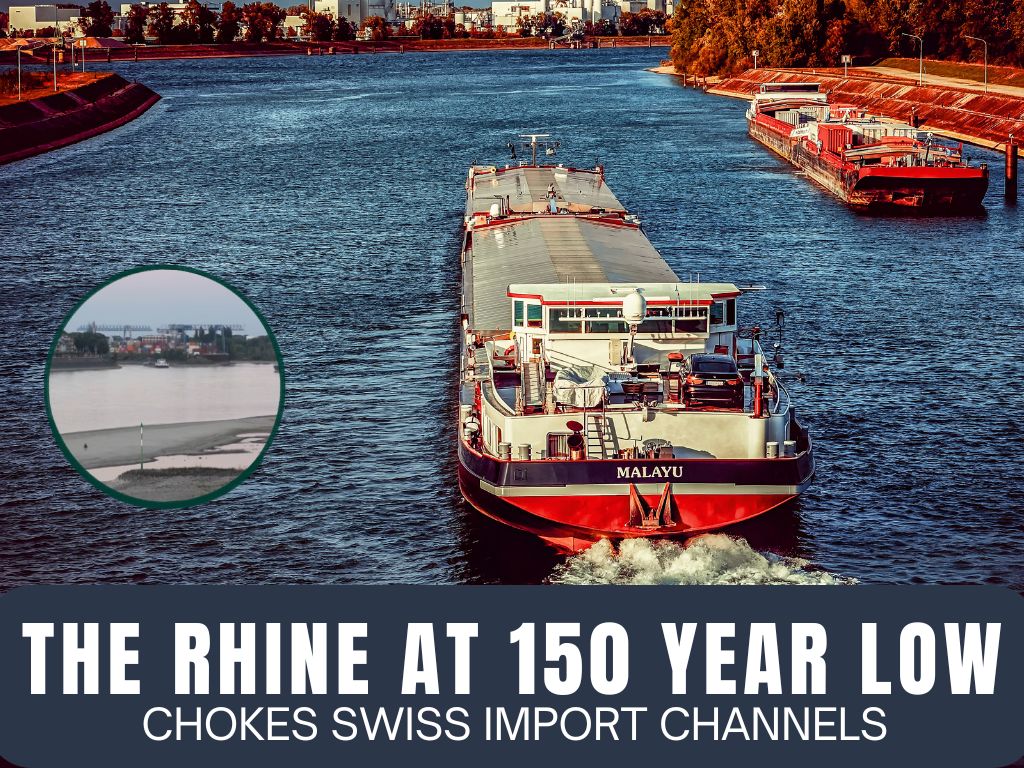
Unfortunately, that vital economic artery is currently facing a massive hurdle. Record low water levels have effectively cut off Switzerland’s main waterway connection to the world’s oceans, creating a major supply chain headache.
Here is everything you need to know about the situation on the Rhine and what it means for Switzerland.
The Bottleneck at Kaub
The root of the problem lies downstream in Germany, specifically near the town of Kaub. Water levels have plummeted so drastically that the river is reportedly close to splitting in two.
For the massive cargo ships that navigate these waters daily, this is a nightmare scenario. The low water levels have made the river barely navigable. Many transport vessels have had to stop their journeys entirely, while those bravely pushing through are forced to carry only a fraction of their usual loads just to keep from running aground.
What This Means for Swiss Imports
You might be wondering: just how much does Switzerland actually rely on the Rhine?
Want To Save This For Later?
The answer is quite a bit. Under normal conditions, around 10% of all Swiss imports enter the country via this river route. This isn’t just everyday consumer goods, either. The ships traveling the Rhine carry heavy, bulk essential commodities, most notably:
- Oil products
- Animal feed
- Agricultural fertilizers
With the barges tied up or running light, the traditional supply chain for these goods has been severely disrupted.
Will There Be Shortages?
The good news is that Swiss residents and businesses don’t need to panic about running out of essentials. The Federal Office for National Economic Supply has stepped in to reassure the public that essential goods will continue to reach the country.
However, bypassing the Rhine comes with a steep price tag. To keep the supply chain moving, freight companies are being forced to quickly pivot, offloading goods onto trains and trucks. Switching to rail and road networks at the last minute is a logistical challenge and, more importantly, it’s significantly more expensive than river transport. Ultimately, these extra freight costs could trickle down to consumers.
A Ripple Effect of Extreme Weather
This situation is a stark reminder of just how fragile our global (and local) supply chains can be in the face of extreme weather and changing climate conditions. What happens in a small German town on the Rhine can quickly force a massive logistical pivot in landlocked Switzerland.
As we wait for rain to replenish the riverways, the supply chain sector will be working overtime to keep the goods flowing into the Alps via road and rail.
What are your thoughts on this? Have you noticed any impacts of extreme weather on the supply chains in your area? Let us know in the comments below!