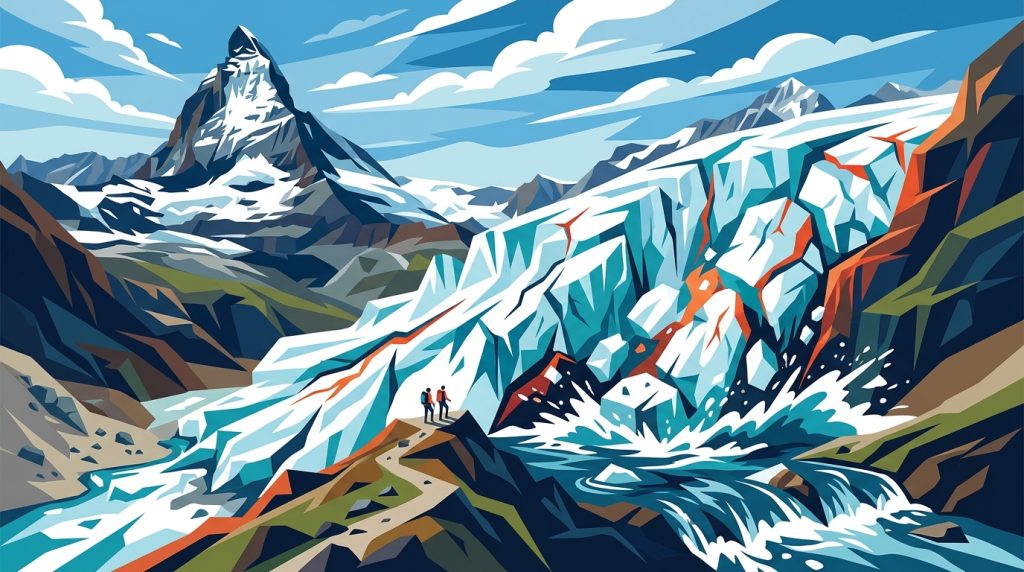
You know how we love our Swiss mountains. They’re part of what makes this country so special. But sometimes, even these “supposedly” permanent giants remind us just how powerful and unpredictable nature can be.
Right now, something rather worrying is happening in the mountains near Zermatt.
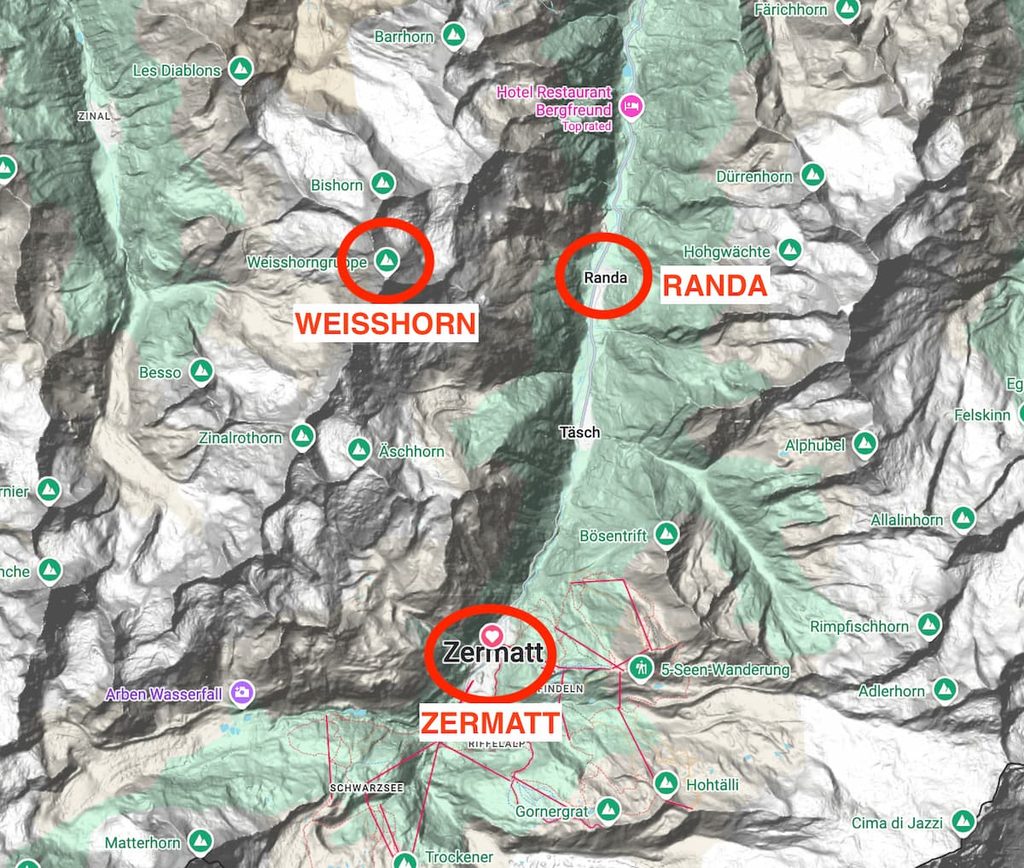
High above the village of Randa, in the Matter Valley, an enormous mass of ice on the eastern side of the Weisshorn is slowly moving downhill.
And we’re not talking about a little bit of ice.
According to an Alpin report published on 28 October 2026, around 250,000 tonnes of unstable ice have been moving downhill at speeds of up to 20 centimeters per day.
That might not sound particularly fast, but with that much ice perched high above a valley, it’s a serious concern.
The real danger isn’t just the ice
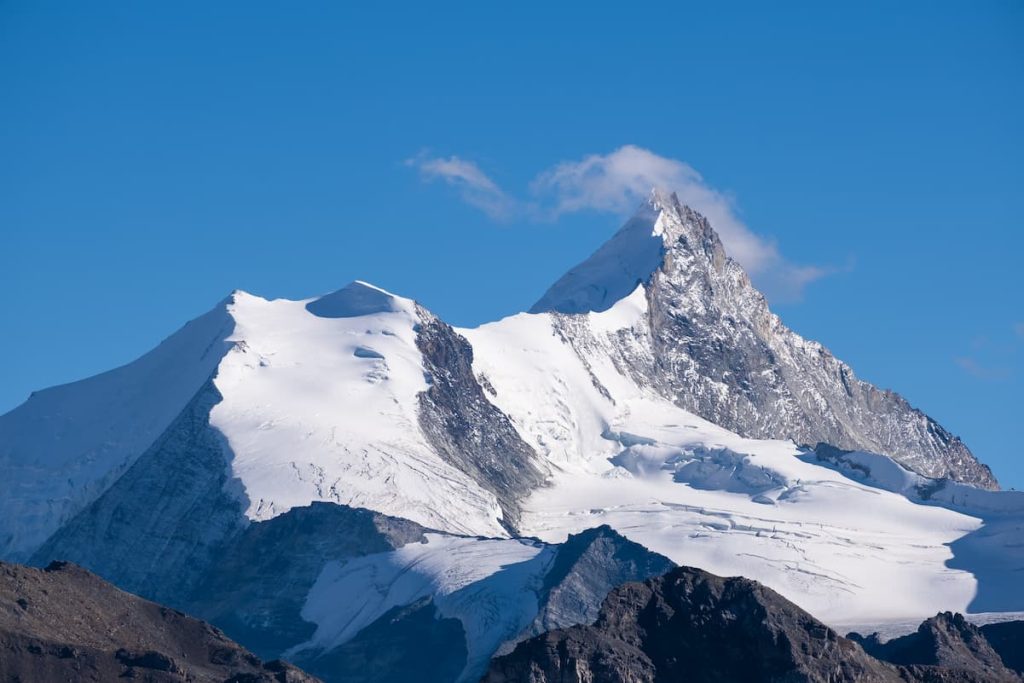
The unstable section belongs to the Weisshorn Ost hanging glacier, situated above the Bisgletscher on the eastern slopes of the 4,505-meter Weisshorn.
Scientists and local authorities have been monitoring increased movement since June 2026.
Several chunks of ice have already broken away, including at least three significant falls on 24 August. Fortunately, the ice remained on the glacier plateau below.
But winter introduces another complication.
As snow accumulates beneath the unstable ice, a major collapse could trigger something much more dangerous than a straightforward glacier fall.
The falling ice could sweep up large quantities of snow, creating a powerful ice-and-snow avalanche.
According to avalanche experts, an unstable snowpack could even cause a chain reaction, with additional avalanches increasing the amount of material rushing downhill.
That worst-case combination is considered unlikely, but it is serious enough to warrant continued monitoring.
There’s some encouraging news, too
Interestingly, the situation has already changed considerably over the past few months.
According to information released by cantonal natural hazard specialists on 29 October, the volume of unstable ice has decreased from approximately 500,000 cubic metres to between 250,000 and 300,000 cubic metres.
In other words, repeated smaller collapses have reduced the amount of ice still hanging above the valley.
That’s encouraging because a series of smaller falls is generally preferable to one enormous collapse.
However, the remaining ice mass is still substantial, and the arrival of winter snow means the authorities cannot simply relax their precautions.
What does this mean for Randa and Zermatt?
This is where it’s important to separate the actual danger from some of the more dramatic headlines.
The village of Randa is not currently considered to be in immediate danger, and no evacuation order has been issued for its residents.
The municipality confirmed on 27 October that the residential area was not affected by the current situation.
However, the designated danger zone below the glacier remains strictly off-limits.
Official access routes for pedestrians and cyclists into that area are also closed.
Monitoring remains at Level 3, with specialists using sophisticated radar equipment and cameras to track the ice’s movement.
In a particularly severe scenario, an avalanche could potentially affect transport infrastructure in the Matter Valley, including the road and railway connecting Zermatt with the rest of Switzerland.
But that doesn’t mean Zermatt is being evacuated or that visitors should cancel their holidays.
Authorities are continuously assessing the danger, and the current restrictions are localized.
Why this matters beyond one glacier
For those of us living in Switzerland, stories like this are particularly sobering.
We tend to think of our mountains as permanent features of the landscape. The Matterhorn, the Weisshorn and the countless other Alpine peaks have stood there for thousands of years.
But the glaciers surrounding them are anything but permanent. And even the permafrost inside the rocks is melting and causing major issues.
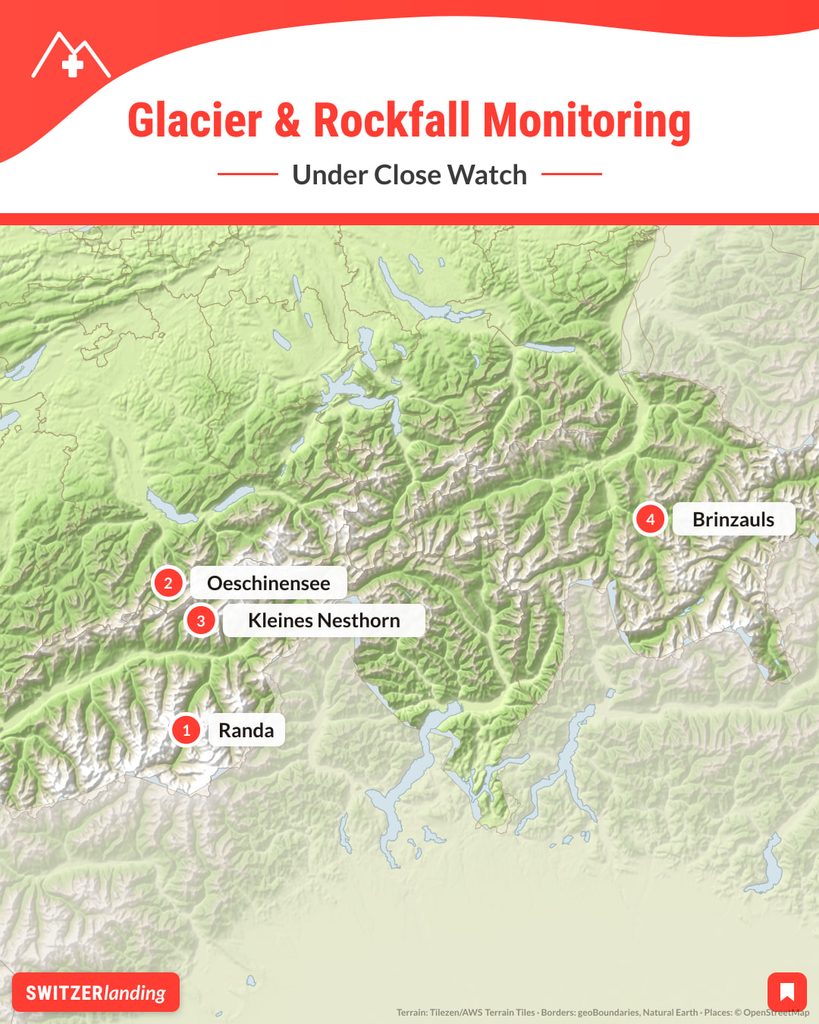
The image above lists some of the mountains and glaciers being closely monitored.
Including one above the popular Oeschinen Lake. There was a small rockslide just this summer.
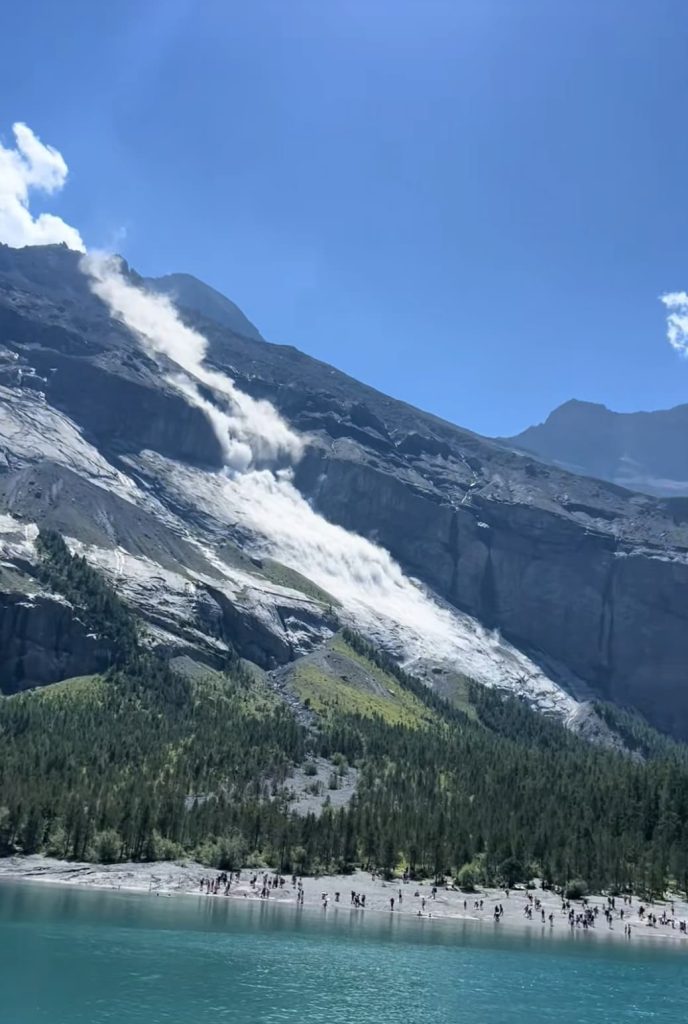
Switzerland’s glaciers have been retreating rapidly as temperatures rise, and changes in ice cover and mountain permafrost can affect the stability of Alpine slopes.
That doesn’t mean every glacier collapse can be directly attributed to climate change. These are complex natural processes influenced by terrain, ice movement, weather and temperature.
But it does remind us that our Alpine landscapes are constantly changing, sometimes in dramatic and dangerous ways.
What should visitors do?
For anyone visiting Zermatt, Randa or the surrounding Matter Valley, my advice is simple.
Respect the local restrictions, particularly if you’re planning hikes or mountain excursions near the Weisshorn or Bisgletscher.
Don’t cross barriers or enter closed areas for a better photo.
And keep an eye on official local updates, because conditions can change quickly.
Swiss authorities have considerable experience managing Alpine hazards, and sophisticated monitoring systems let them identify developing risks and take precautions.
For the latest restrictions, check the official municipality of Randa website.
For now, the extraordinary mountains around Zermatt remain as beautiful as ever.
But this enormous, slowly moving glacier is a powerful reminder that even the most familiar Alpine landscapes deserve our respect.
Sometimes the mountains aren’t quite as still as they look.
Updated 12 November 2026, based on the latest official municipal notice located (27 October) and subsequent reporting from 29 October. See article here.