Hey there, ever really thought about Swiss cheese? Not just the stuff you slice for a sandwich, but the real deal. Because in Switzerland, cheese isn’t just food; it’s history, landscape, tradition, and a whole lot of passion. It’s a story told in every wheel, from the high alpine pastures to those quiet, earthy cellars. Trust me, once you dive into the world of Swiss cheese, you’ll never look at a block of cheddar the same way again.
The Soul of the Alps: Where It All Begins
The magic of Swiss cheese really starts way up high. Imagine cows grazing on lush, wildflower-filled meadows, the air crisp and clean, the scent of pine carried on a gentle breeze. This isn’t just a pretty picture; it’s fundamental to what makes our cheese so special.

Happy Cows, Happy Cheese
It boils down to diet. Swiss cows, particularly those spending their summers in the Alps (Alpen), feast on an incredible variety of alpine herbs and grasses. This isn’t industrial feed; it’s a natural buffet.
Each plant contributes unique compounds to its milk, giving it a depth of flavor you simply can’t replicate. That’s why an Alpkäse (Alpine cheese) tastes distinctly different from a valley cheese, even if made with the same methods. It’s the ultimate example of terroir.
The Alp Life
Come summer, many dairy farmers pack up and move their herds up to these high-altitude pastures. This tradition, called Alpaufzug or transhumance, is centuries old. They live in rustic Alp huts, milking the cows by hand or with simple machines, and immediately turning that fresh milk into cheese right there on the mountain.
It’s often a communal effort, passed down through generations. Visiting an Alpkäserei in summer is a treat – you get to see the whole process up close, smell the woodsmoke, and taste cheese that’s literally hours old.
Pure heaven.
DID YOU KNOW: In local Swiss-German dialects, the word “Alp” does not mean a mountain peak. It specifically means a high-elevation seasonal summer pasture where farmers graze their cattle and make cheese.

The Craft of the Cheesemaker: A Time-Honored Tradition
Making cheese in Switzerland is far from a factory assembly line. It’s an art, a science, and a demanding craft that requires incredible skill and patience.
The Magic in the Cauldron
The process usually begins in a giant copper cauldron, often heated over an open wood fire in traditional settings. Fresh, raw milk (usually unpasteurized for most traditional Swiss cheeses) is gently warmed. A natural rennet, often derived from a calf’s stomach, is added, encouraging the milk to coagulate into curds. The cheesemaker then uses a large harp-like tool to cut these curds into tiny grains – the smaller the grains, the harder the eventual cheese. This is where the cheesemaker’s touch is critical, sensing the texture, the temperature, the exact moment to move to the next stage.
Pressing Matters
Once the curds are separated from the whey (which often goes to feed pigs or is made into Ziger, a fresh ricotta-like cheese), they’re scooped into round molds. These molds are then pressed – sometimes for hours, sometimes overnight – to expel more whey and give the cheese its characteristic shape.
Finally, the young wheels are bathed in a brine solution, which helps form a protective rind and seasons the cheese from the outside in. Each cheese variety has its own specific salt bath duration and concentration, crucial for its final flavor and texture.
Want To Save This For Later?
The Silent Workers: Aging in the Cellar
The real transformation, the one that turns a fresh, mild curd into a complex, flavourful masterpiece, happens in the dark, cool silence of the cheese cellar. This is called affinage.
From Wheel to Masterpiece
After salting, the cheese wheels are moved to cellars, often carved into mountainsides or built with specific ventilation systems to maintain ideal temperature and humidity. Here, they spend months, sometimes years, slowly maturing. Dedicated affineurs regularly turn, brush, and wash each wheel with brine, herbs, or even local wine.
This promotes the growth of specific surface cultures and ensures even moisture distribution, contributing immensely to the cheese’s unique character and to the development of that delicious rind. Think of Kaltbach, for example, where cheeses are aged in natural sandstone caves – the environment there is perfectly suited for developing deep, nutty flavors.
Terroir in Every Bite
Just like wine, Swiss cheese is a product of its terroir. The specific milk, the cheesemaker’s technique, the local microflora in the air of the aging cellar – it all comes together.
A Gruyère from a specific region will have subtle differences from one made just a valley over. An Appenzeller develops its spicy notes from a secret herbal brine. A Sbrinz ages for years, becoming hard and crumbly, perfect for grating. It’s an edible map of Switzerland.
Beyond the Tasting Plate: Real-World Cheese Tips
Ready to explore Swiss cheese for yourself? Here are a few pointers from your friendly guide:
- Visit a Show Dairy: La Maison du Gruyère and the Emmentaler Schaukäserei are fantastic for seeing the process, tasting, and understanding the heritage. They’re well-organised and fun.
- Seek Out Alpkäse: If you’re hiking in summer, look for signs advertising Alpkäse for sale directly from the farm. These are often small-batch, incredibly flavourful, and a truly authentic experience.
- Farmers’ Markets Are Your Friend: Head to local markets for a wider variety of cheeses you might not find in supermarkets. Don’t be shy; ask for samples!
- Try More Than the Big Names: While Gruyère and Emmentaler are classics, branch out! Try spicy Appenzeller, crumbly Sbrinz (great grated over pasta), creamy Vacherin Mont d’Or (seasonal, typically autumn/winter), or the unique floral notes of Tête de Moine, traditionally shaved into rosettes with a girolle.
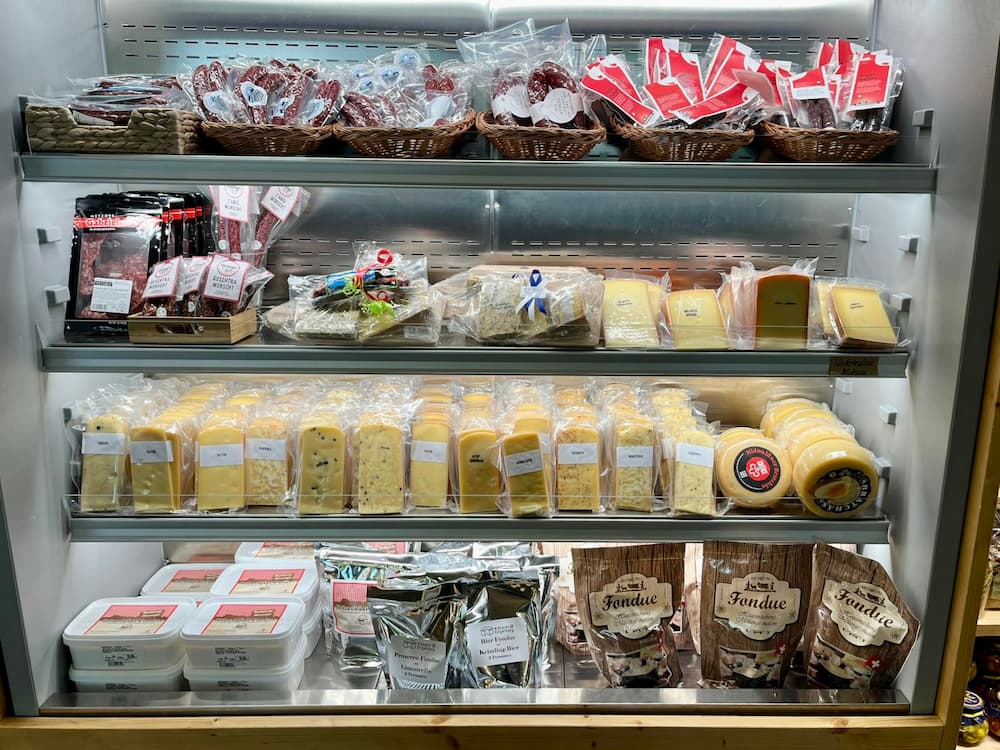
- Buying for Home: Most larger cheese shops and show dairies offer vacuum packing, which is essential for bringing cheese home. Keep it cool during travel! (Just be aware of your local import laws, especially when traveling outside of Europe like the UK).
- Pairing Perfection: A good crusty bread, some crisp apples or pears, and a dry Swiss white wine like Fendant or Chasselas are all you need to truly appreciate the cheese.
Quick Cheese FAQ
- Raw Milk? Yes, many traditional Swiss cheeses (especially AOP-protected ones) are made with unpasteurized raw milk. Don’t worry, the aging process makes them safe.
- What’s AOP? Appellation d’Origine Protégée (Protected Designation of Origin). It means the cheese is produced, processed, and prepared in a specific geographical area according to traditional methods, ensuring authenticity. Look for the stamp!
- Fondue Cheese? Gruyère and Fribourg Vacherin are the classic duo, but many regional blends exist. Ask a local cheesemonger for their favourite mix.
Enjoy your cheesy journey through Switzerland! It’s a delicious way to truly connect with the heart of our country.