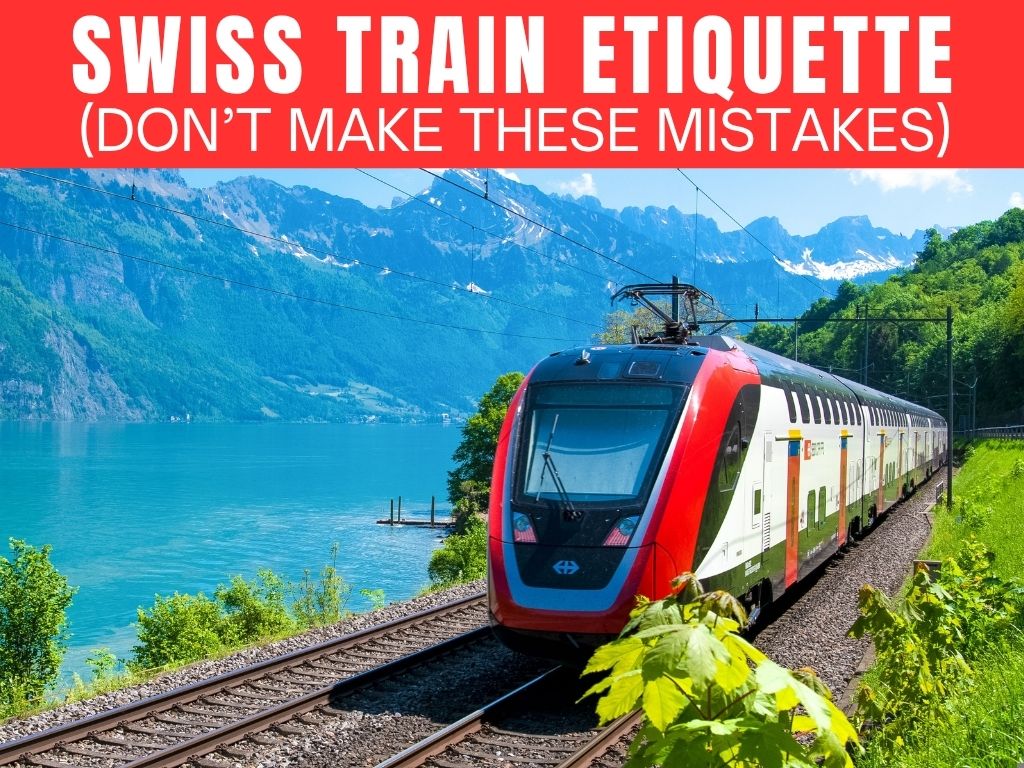
Swiss trains run on a level of precision and shared etiquette that most visitors have never encountered:
- doors close on the exact minute
- seats stay spotless
- a quiet carriage actually means quiet
None of the rules are written down anywhere obvious, so most tourists learn them by getting a look, a comment, or occasionally a fine.
Here’s what trips people up, and how to blend in instead.
1. Not waiting for people to get off before boarding
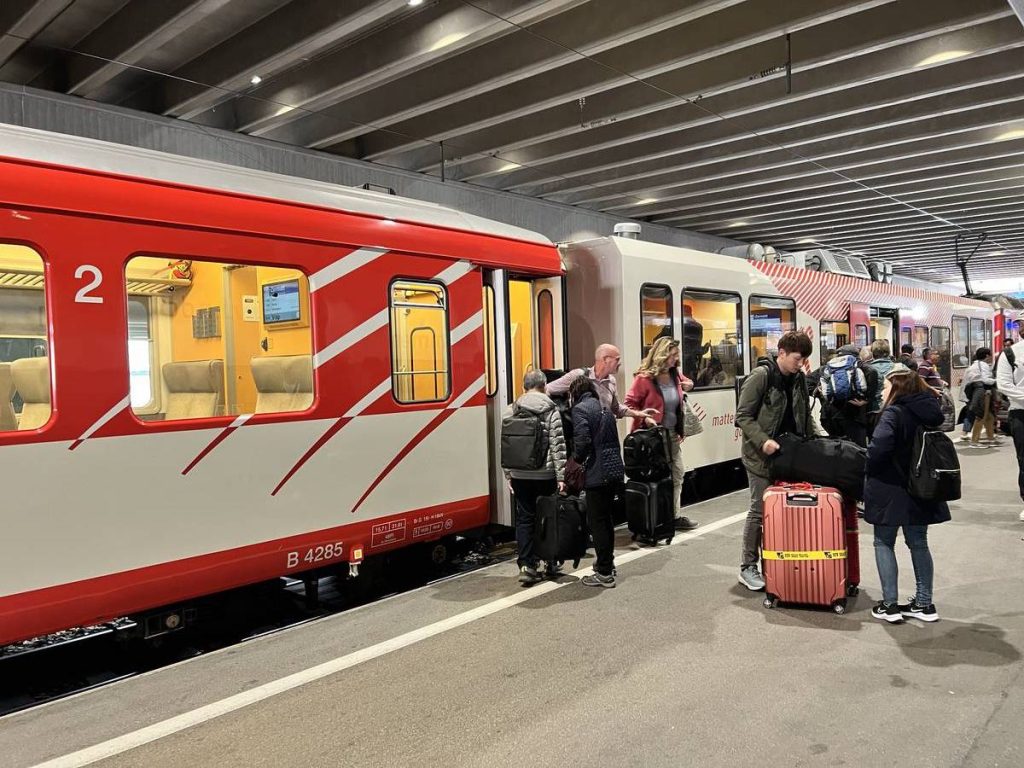
Crowding the doors the second a train pulls in, before anyone has had a chance to step off, is one of the fastest ways to get a sharp look from Swiss commuters.
Standing to the side and letting the doors clear first isn’t just polite; it’s also faster overall since blocking the exit slows everyone down, including you.
👉👉 SEE MY OTHER SWISS TRAIN TIPS FOR FIRST-TIMERS
2. Feet on the seats
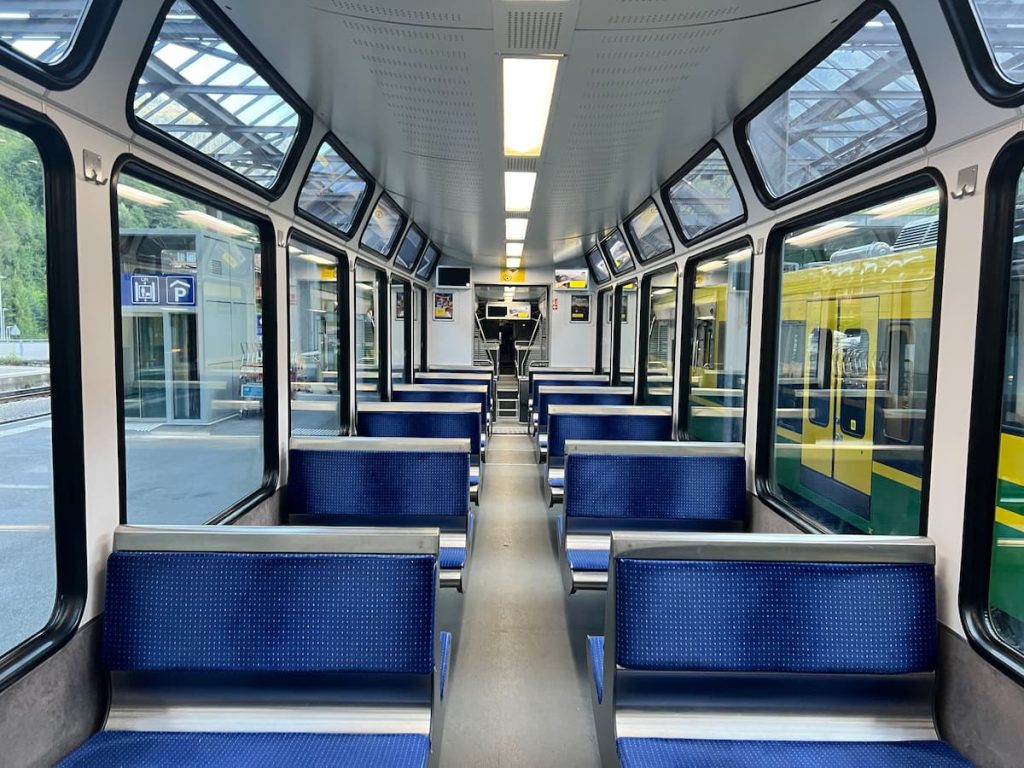
Keeping seats spotless is taken so seriously that putting feet up, even with shoes off, will usually draw a comment from a conductor or fellow passenger.
Swiss trains genuinely stay clean (see the above pic) because almost everyone treats the seats as something other people need to use right after you.
3. Talking loudly, especially in a marked quiet zone
Many Swiss trains have a Ruhezone (quiet zone), marked with a small symbol near the seat or window, where phone calls and loud conversations aren’t allowed.
Even outside a marked quiet zone, the general norm on Swiss trains is noticeably lower volume than on trains in many other countries. A phone call at a normal volume elsewhere often reads as disruptive here.
👉👉 GRAB MY FIRST TIMER’S GUIDE TO SWISS TRAINS
Want To Save This For Later?
4. Assuming there’s a grace period if you’re running late

Swiss trains leave at the exact printed minute, not a minute after.
Visitors used to a few minutes’ buffer elsewhere sometimes miss a train standing right in front of them because they assume there is time to spare.
Being on the platform with a couple of minutes to spare, rather than arriving right at departure time, avoids this entirely.
5. Blocking the aisle or doorway with luggage
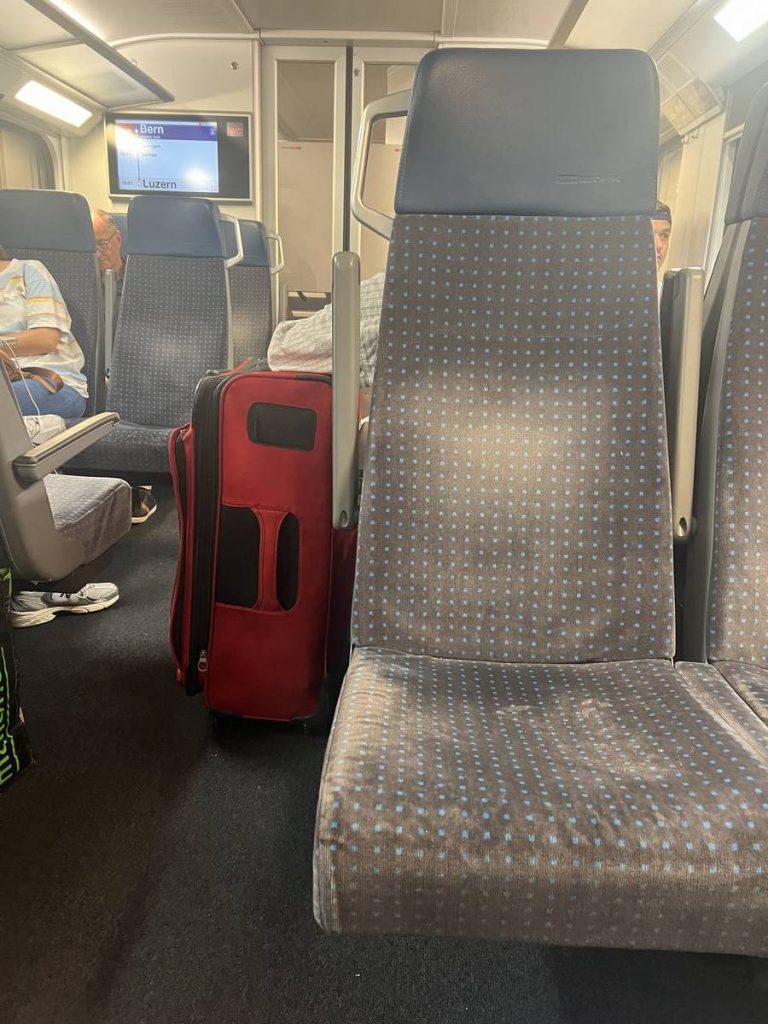
Large suitcases left in the aisle or propped against the doors are a common source of frustration for other passengers trying to move through the carriage.
Designated luggage racks near the doors or above the seats are specifically for this, and using them keeps the aisle clear as locals expect.
6. Sitting in first class without a first class ticket
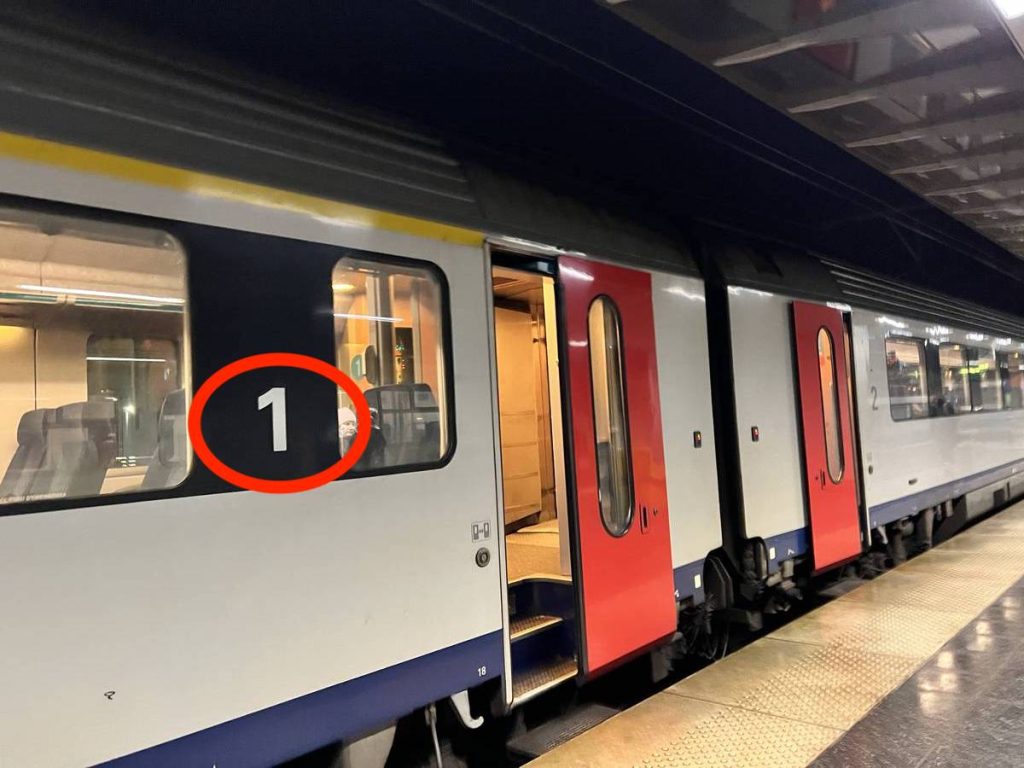
First and second class look similar enough at a glance that visitors sometimes sit in the wrong one without noticing the small “1” or “2” marked near the door or on the seat upholstery.
Conductors check tickets thoroughly and consistently, and sitting in first class on a second-class ticket usually means either moving immediately or paying the difference on the spot.
QUICK TIPS
Best time: None of this depends on time of day, but rush hour commuter trains are where etiquette misses get noticed fastest, since every seat and every extra few centimeters of space matters more.
Getting there: The SBB app shows exactly which class, quiet zone, and family zone each carriage is before you board, worth checking before finding a seat rather than after.
👉👉 SEE MY GUIDE ON USING THE SBB APP (LIKE A LOCAL)
One practical tip: Buying or validating a ticket before boarding, rather than planning to sort it out on the train, avoids both an awkward conversation with a conductor and a possible fine, since Swiss ticket checks are frequent and consistent.
Which of these have you seen a tourist get caught on?
Tell us in the comments; everyone who’s ridden a Swiss train has a story.




Make sure you tell your conductor if you are interrupting your journey. I was going from. Basel to Lausanne, stopping in Neuchâtel a few hours. I’m not sure if they still punch tickets these days but if they do, they will punch it at different places, depending if you stop or not. Therefore, I was caught traveling with a used ticket…. As if I had gone directly to Lausanne! Bon voyage!
We were in the first class car going to Lugano (I don’t remember exactly where we were coming from), anyway, there was a gentleman in the first class car who do not have a ticket. He started to give the conductor a hard time and was basically being a jerk. Every man in that car stood up and stared at him until he shut up. Loved that.