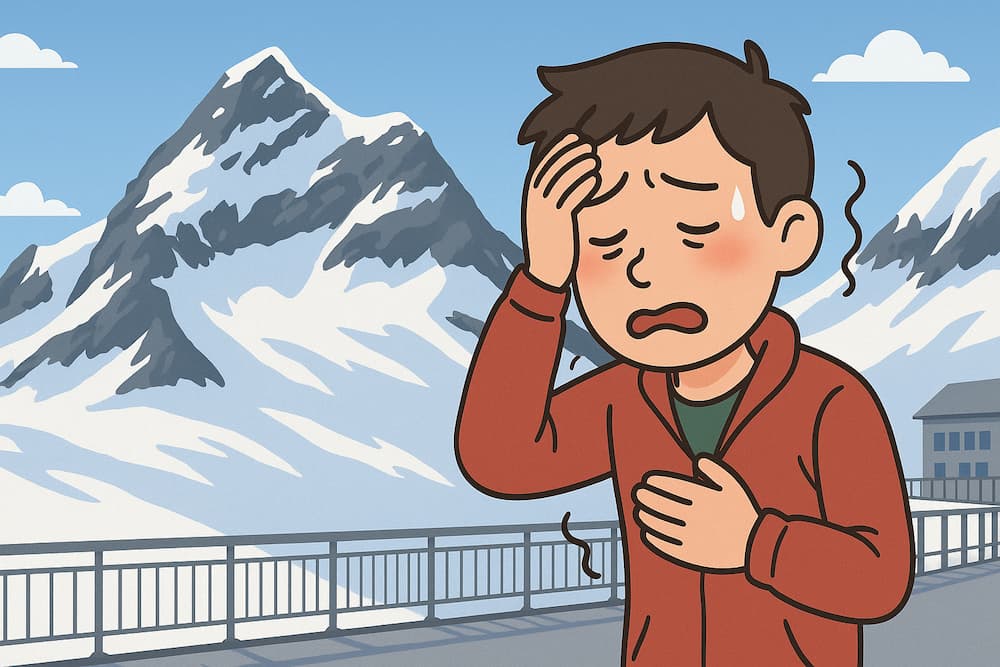
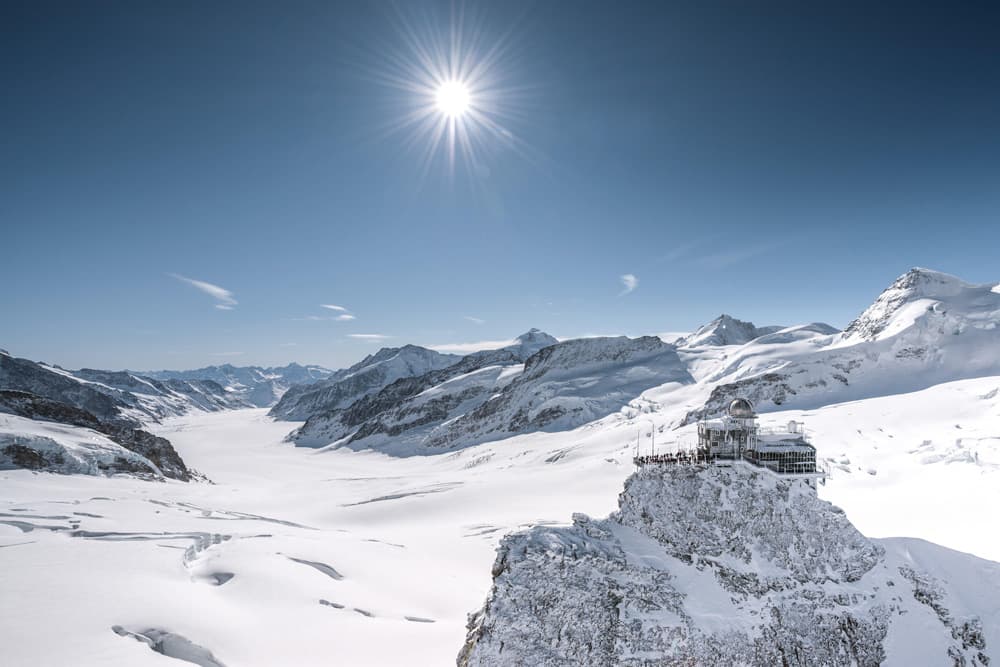
A visit to the Jungfraujoch, aka the “Top of Europe,” at 3,454 metres (11,332 ft) above sea level, is a spectacular experience.
However, the high altitude can cause issues you should be aware of.
Below is a breakdown of what people say, how altitude affects the body, and what you can do to reduce those effects.
What People Experience On The Top
Here are some real-world reports from visitors to Jungfraujoch and other similarly high-altitude attractions:
I went to the top of the Jungfraujoch (11,322 ft) … Immediate pounding headache and disoriented. Had to leave immediately… (Rick Steves Community)
For many healthy people, the effects are mild (slightly breathless, more tired, maybe a headache).
Usually it’s not a problem. … If you go to the Jungfraujoch and just walk around … you may notice you’re breathing a bit more, but that’s it. Wouldn’t go jogging or anything though… Reddit
For a minority, especially those with sensitivities or underlying conditions, symptoms can be more pronounced (dizziness, nausea, disorientation).
Which Mountains Can Cause Problems?
I know I am focusing on the Jungfraujoch here because it is seriously high, but here are some other mountains you can also get altitude sickness on:
- Matterhorn Glacier Paradise (Zermatt)
- Gornergrat (Zermatt)
- Titlis (near Lucerne)
Some people report shortness of breath on even lower mountains like Grindelwald First and others, but I wonder if that is just lack of fitness?
Walking uphill in the mountains is hard work. If you are not used to walking much at all, and definitely not uphill, you will find it challenging and find yourself breathing very hard! My parents and in-laws even complain about walking uphill to my house :> at almost sea level.
Why It Happens
At high elevations like the Jungfraujoch (around 3,400–3,500 metres or 11,000 feet), and other mountains like Titlis, Gornergrat, and Matterhorn Glacier Paradise, the air pressure is lower and there’s less oxygen available. They say there is around 33% lower air pressure and only 14% oxygen.
With less oxygen, your body has to work harder. You breathe faster, your heart beats faster, and you may feel tired sooner. Because the train takes you up rapidly, there’s little time to acclimatize, which can make the effects more noticeable.
What Happens To People

Typical symptoms of altitude effects, sometimes called acute mountain sickness, include
- headache
- fatigue
- shortness of breath
- nausea
- poor sleep.
Studies suggest that 20–30% of visitors at around 3,500 metres may feel some of the above effects.
However, another Swiss study concluded that altitude sickness is generally not a concern for short visits to the Jungfraujoch.
In other words, most healthy people experience only mild or temporary discomfort. Still, you may be more likely to feel the altitude if you have health issues or overexert yourself.
👉👉 Summary: Although the altitude is high enough that effects are possible, for most healthy visitors doing a day‐trip, severe problems are uncommon. But “possible” does not mean “impossible,” if you have health issues or push hard, you may feel it.
How to Reduce Risks & Have a Better Trip
Here are practical tips based on travel guides and medical/prevention advice:
- Acclimatize if you can
- If possible, spend a day or part of a day at a moderate altitude before going up to ~3,400 m. For example, stay in a mountain village or up to ~2,000–2,500 m first.
- Walking slowly and not rushing when you first arrive helps.
- Stay well hydrated
- Drink plenty of water before and during your visit. Dehydration can worsen altitude effects.
- Avoid excessive alcohol the night before or during your high-altitude stay (it can worsen symptoms).
- Take it easy physically.
- Avoid vigorous exertion (running up stairs or steep walks) immediately after arrival.
- Give yourself a chance to acclimate: maybe take a lighter pace, rest, let your body adjust.
- Pack for symptoms
- Bring simple pain relief (for headache), maybe nausea relief if you’re sensitive.
- Some people consider preventive medication (like Acetazolamide/Diamox), but only under medical advice.
- Know the symptoms of more serious problems: confusion, severe breathlessness, chest pain, repeated vomiting — these warrant descent or medical help.
- Monitor your body & don’t push
- If you feel unwell (dizzy, nauseous, very short of breath, abnormal fatigue), don’t ignore it — stop, rest, descend if needed.
- Even a small descent (to a slightly lower altitude or lower floor) can help.
- Special considerations for those with medical conditions
- If you have significant heart or lung disease or other major medical issues, consult your doctor before going. A medical guideline document for Jungfraujoch notes that people with serious cardiac/lung issues should seek advice.
- For older visitors, children, or anyone unsure, extra caution is wise.
👉👉 PRO TIP: Oxygen bottles are available at the shop on top of the Jungfraujoch
Final thoughts
- Visiting Jungfraujoch is generally safe for healthy people and is a fantastic experience.
- You may notice subtle altitude effects (e.g., feeling breathless, stair climbs harder, or a mild headache).
- Severe altitude sickness is rare for a day‐trip at this altitude, but possible, especially if you ascend fast and exert yourself or have underlying conditions.
- Preparation and awareness go a long way: hydrate, go slowly, listen to your body.
- If someone with you starts feeling seriously unwell, the fastest descent is the best remedy.




Hi Ashley!
We were just in the LAUTERBRUNNEN area for two weeks and did a lot of hiking around the area …..while we were hiking down from Kleine Sheidegg to Wengen ,we saw a glider high above the Jungfrau and wondered how that person managed in such high altitude.
Perhaps this is a normal activity to do but it certainly had us wondering! I wish I could post that picture here, but unfortunately, this comment box does not support it.
Thank you for all your wonderful posts on Facebook and emails to help us with our most amazing trip. We absolutely loved being in this area for two weeks and your notes really helped us be informed before we got there. Also, I purchased your notes on the passes and they really helped.
pleasure, glad you had an awesome trip!