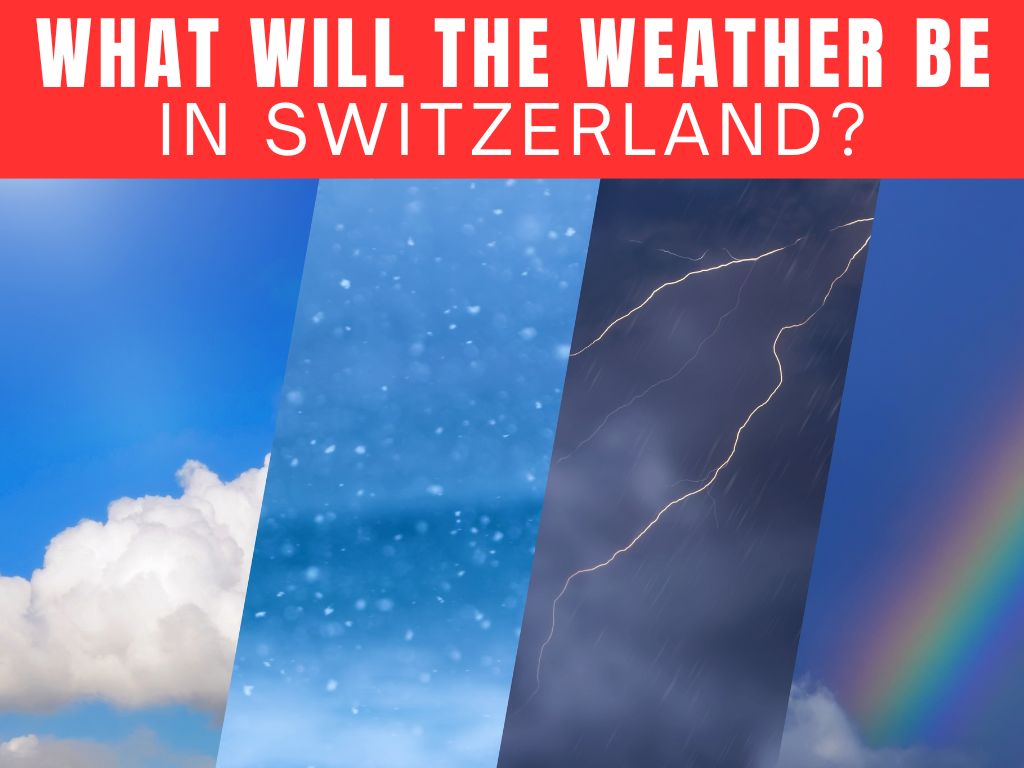
Let’s address the elephant in the travel forum.
Every year, thousands of eager travelers type variations of the exact same question into Google or Facebook groups:
“What will the weather be like in Zermatt on July 25th?” (This is me being sarcastic by the way)

I hate to break it to you, but the Swiss Alps do not care about your itinerary, your pre-booked flights, or your meticulously color-coded spreadsheet.
On July 25th, it could be a scorching 34°C (93°F) in Zurich, a crisp 12°C (54°F) in Grindelwald, and a literal blizzard at the top of the Jungfraujoch. Simultaneously.

Welcome to Switzerland, where the weather forecasts are a suggestion, things can change on a dime, and the weather varies by location and height!
If you want to survive Swiss summer without a heat stroke or hypothermia, you need to stop planning for a temperature and start planning for variation.

Here is how to actually prepare.
1. The Altitude Reality Check: How Warm Will It Actually Be?
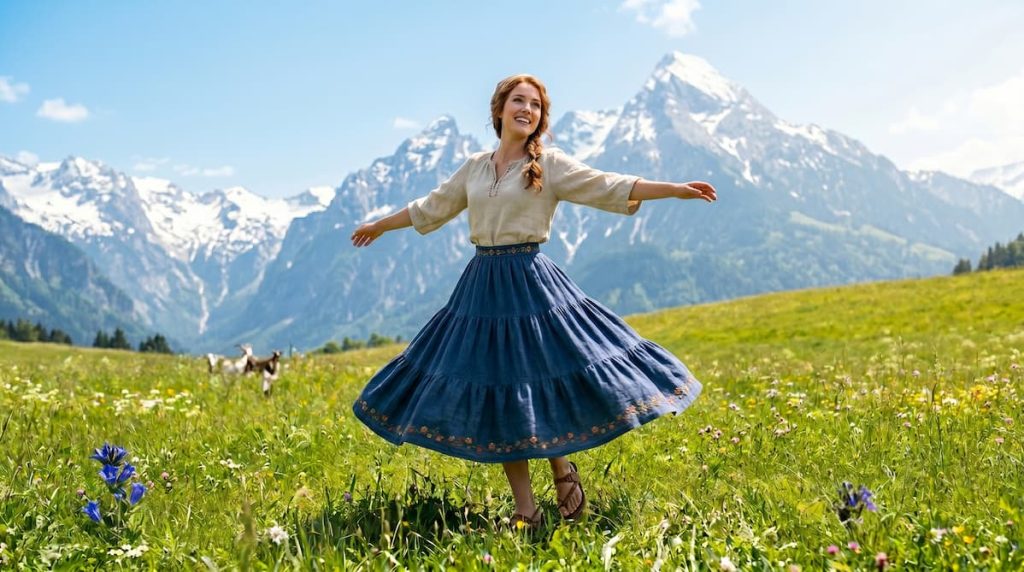
When people think of summer in Switzerland, they often picture Julie Andrews frolicking in a breezy, pleasant meadow. They don’t picture themselves sweating through their linen shirt on a crowded tram.
To understand Swiss weather, you have to throw away the calendar and look at an altimeter.
The Lowlands & Cities (Zurich, Geneva, Lucerne, Bern)

- The Vibe: Proper, unadulterated summer.
- The Temps: July averages hover around 24°C to 28°C (75°F–82°F), but heatwaves are increasingly common, frequently pushing temperatures past 30°C–35°C (86°F–95°F).
- The Reality: It gets humid and sticky, and everyone survives by jumping into the nearest lake or river (Badi culture) after work.
The Mountain Valleys & Peaks (Zermatt, Lauterbrunnen, St. Moritz)

- The Vibe: Spring, autumn, and winter, all happening within a 20-minute cable car ride.
- The Math: As a rule of thumb, temperature drops by about 6.5°C for every 1,000 meters of elevation gained
- The Reality: If it is a beautiful 30°C (86°F) down in Interlaken, it will be roughly 17°C (62°F) up in Mürren, and hovering right around 0°C (32°F) with a biting wind up at the Jungfraujoch!
👉👉 BE PREPARED WITH THE RIGHT CLOTHES – PACKING LIST & JACKETS/SWEATER
Want To Save This For Later?
2. The Great Swiss Air Conditioning Myth

If your survival strategy for a 32°C (90°F) July afternoon is “I’ll just hang out in the AC,” I have bad news for you.
The Golden Rule: In Switzerland, air conditioning is considered a luxury, a climate-change contributor, and generally unnecessary for “the three weeks of actual heat” we get a year.
- Where you won’t find AC: The vast majority of Airbnbs, historic boutique hotels, older regional trains, local restaurants, and grocery stores.
- Where you might find it: Modern 4- and 5-star international hotel chains, major supermarkets (Migros/Coop), and the high-speed InterCity (IC) trains.
👉👉 HERE IS A LIST OF HOTELS WITH AC IN INTERLAKEN & AC IN LUCERNE
How to Survive a Swiss Hotel Without AC

Do as the locals do.
During the day, shut the heavy exterior window blinds completely to block the sun. At night, open the windows wide to let the crisp alpine air in.
Just be prepared for the ambient soundtrack of distant cowbells, church bells chiming every 15 minutes, or a stray late-night tractor.
3. Planning the Mountains: Look Up, Not Forward
The biggest mistake tourists make is buying expensive mountain excursion tickets months in advance to lock in a schedule.
Don’t do that. 👉👉 DO THIS INSTEAD
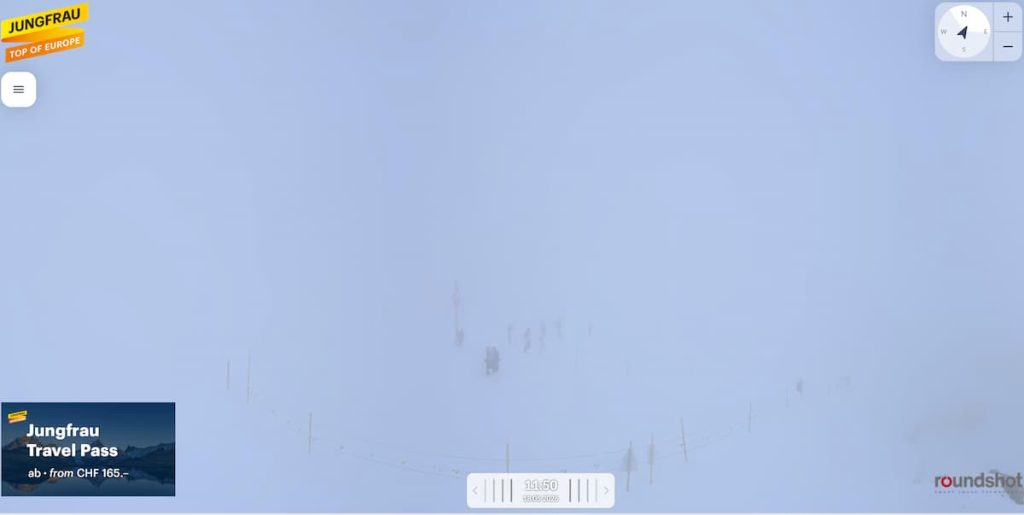
If you buy a 200 CHF ticket to the top of a mountain for July 25th, and July 25th turns out to be completely socked in with fog, you have just paid a fortune to sit inside a freezing, damp cloud. Like this picture of the Jungfraujoch yesterday!
The Morning-Of Strategy
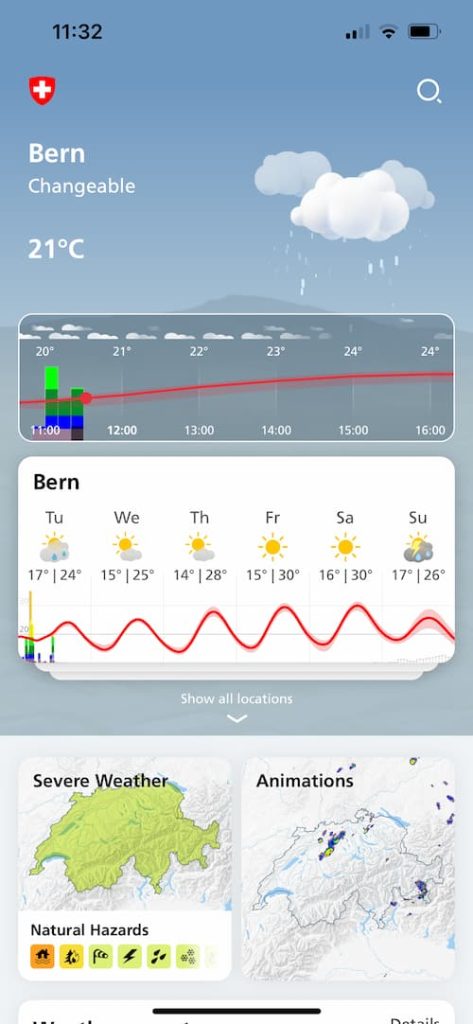
Never trust a weather forecast predicting the mountains three days out. Instead, download the MeteoSwiss app and follow this exact routine the morning of your planned mountain trip:
- Wake up, make coffee.
- Open the live webcams for the peak you want to visit (Schilthorn, Pilatus, Titlis, etc.).
- If the webcam shows clear blue skies, go immediately. Buy your ticket at the station.
- If it shows total gray emptiness, pivot. Go to a castle, visit a lake, or day-drink in a valley instead.
The Afternoon Storm Trap
Summer in the Alps means rising heat and humidity.
As the valleys warm up during the day, clouds build up over the peaks.
By 2:00 PM or 3:00 PM, sudden, violent thunderstorms with heavy lightning are common. Always do your high-altitude hiking and peak-bagging in the morning.
And keep an eye on the MeteoSwiss app 👇👇👇
👉👉 APPS YOU NEED TO DOWNLOAD
4. Packing & Dressing: The “On-and-Off” Onion System
Because you will likely experience three seasons in a single day, your outfit needs to operate like an onion: layers that can be aggressively peeled off or piled on.
👉👉 Here is the packing list you need
| Layer | What to Wear/Pack | Why You Need It |
| Base Layer | T-shirt, tank top, or light linen shirt. Shorts or light pants. | For sweating your way through the city or walking around the sunny valley floor. |
| Mid-Layer | A solid fleece, a lightweight merino wool sweater, or a packable down jacket. | The second that cable car passes the tree line, you will feel the chill. |
| Outer Layer | A windproof, waterproof rain jacket (Gore-Tex or similar). | Mountain peaks are notoriously windy, and a good windbreaker does the heavy lifting of keeping you warm. |
| Footwear | Sturdy trail runners or hiking boots (for the mountains); sneakers or sandals (for the city). | Leave the flip-flops at the lake. Even the paved viewing platforms on mountain tops can be slick with ice and slush in July. |
The Silent Killer: Alpine UV Rays ☀️

At 3,000 meters, the atmosphere is thinner, and if there is snow on the peaks, it reflects the sun like a giant mirror.
Sunglasses and heavy-duty sunscreen are non-negotiable. You will burn in 15 minutes without them, looking less like a seasoned alpinist and more like a boiled lobster.
The Verdict
So, what is the weather going to be like on July 25th?
It’s going to be absolutely spectacular, mildly suffocating, freezing cold, and potentially stormy. Pack a t-shirt, a winter jacket, an open mind, and zero expectations of air conditioning. You’ll fit right in.