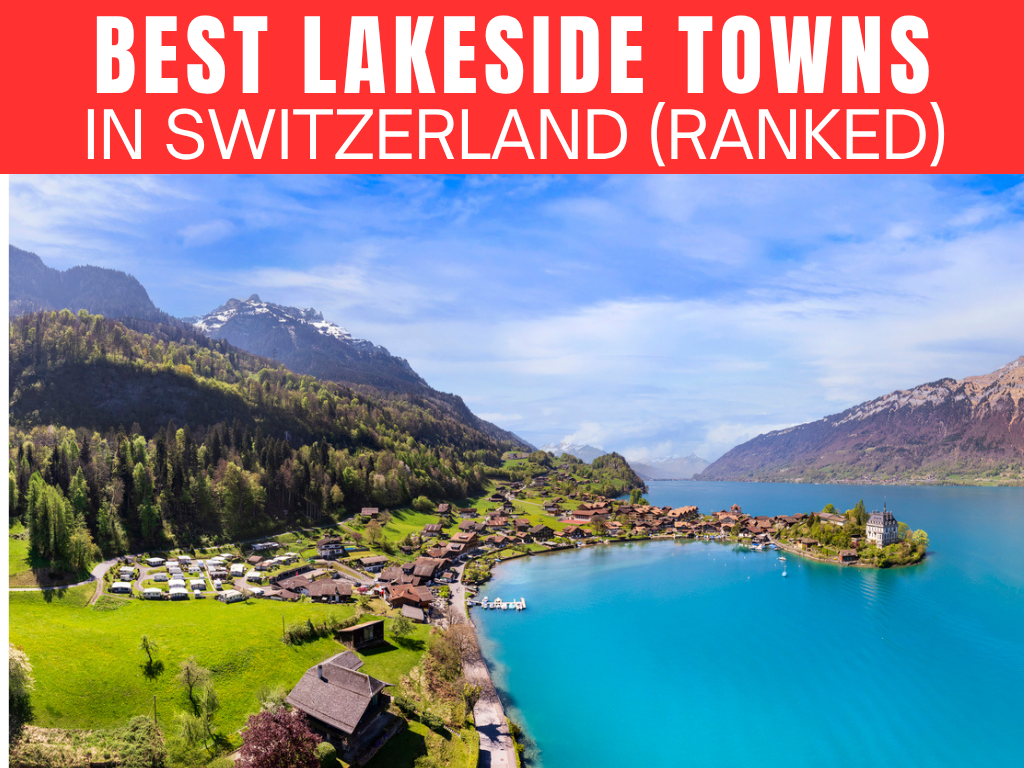
Switzerland’s lakes aren’t a single interchangeable postcard; they are divided into distinct regions with their own climates, languages, and characters.
Picking the right lake town to base a trip around depends more on which region fits the trip than on any single “prettiest” ranking. Here’s the breakdown, region by region.
Lake Lucerne (central Switzerland)
Lake Lucerne is where the alpine scenery starts in earnest, with steep, forested shorelines and mountain peaks rising straight from the water.
1. Weggis

At the foot ot Rigi, Weggis ranks first for the rare combination of a genuinely mild microclimate, a short scenic boat ride into Lucerne, and none of Lucerne’s crowds
For many, it offers the best balance of convenience and calm on this lake. Palm trees line its lakeside promenade as proof of that climate.
2. Brunnen
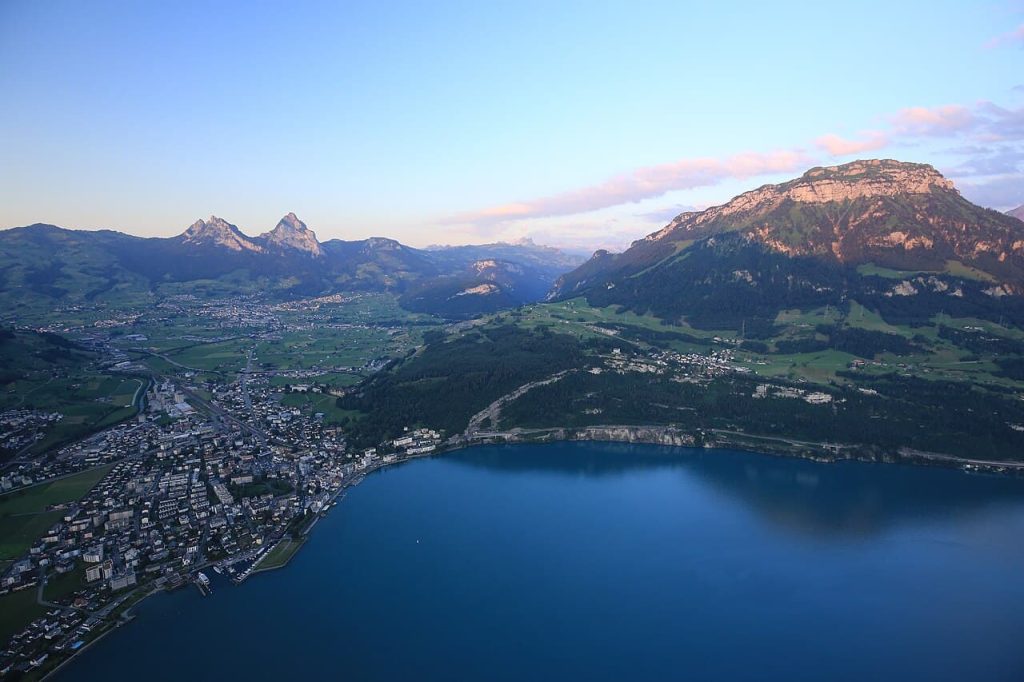
This stunning town takes second for having the single most dramatic setting of the four, where the lake narrows into steep cliffs rising straight from the water, but it ranks below Weggis for being a longer trip from Lucerne itself and having fewer easy amenities.
3. Vitznau

Another Rigi town, this one ranks third mainly because its main draw, the Rigi cogwheel railway, is a single-purpose reason to visit rather than a reason to stay multiple nights. It’s smaller than Weggis and best treated as a base for that one excursion.
4. Küssnacht am Rigi
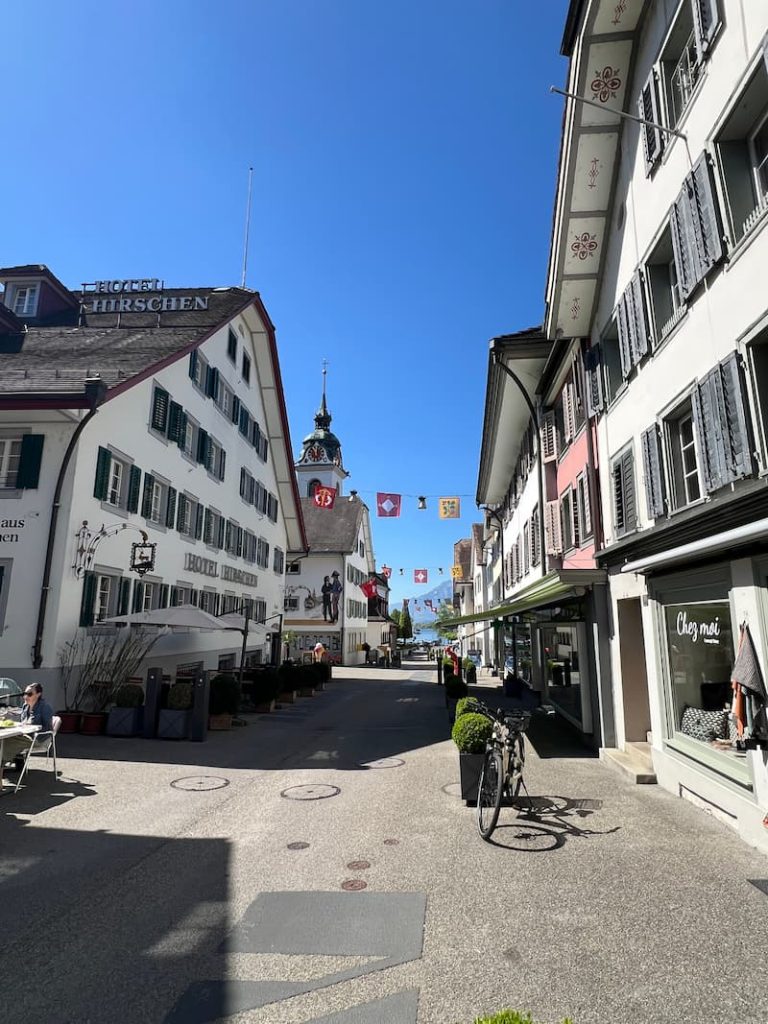
Küssnacht ranks fourth as the most niche pick of the group, worth it specifically for a quieter alternate route up the Rigi or an interest in the William Tell legend and the Hohle Gasse chapel, but with less general appeal than the other three for a first visit.
1-3 DAYS IN LUCERNE: A FIRST-TIMER'S GUIDE FOR 2026
Everything you need to know when planning a trip to the Lucerne Area.
AFFORDABLE AT ONLY 23 CHF
Lake Thun and Lake Brienz (Bernese Oberland)
These two lakes bookend Interlaken and sit at the doorstep of the Jungfrau region’s high peaks, giving them some of the most dramatically framed water views in the country.
1. Thun

In my opinion (and something I told a client recently), Thun takes the top spot on the strength of everything the others don’t quite match.
It has a genuinely stunning setting where the Aare River meets the lake, strong train and bus connections, a real old town with things to actually see and do, boat rides departing right from the center, and a restaurant scene that outclasses the smaller towns around it.
2. Spiez
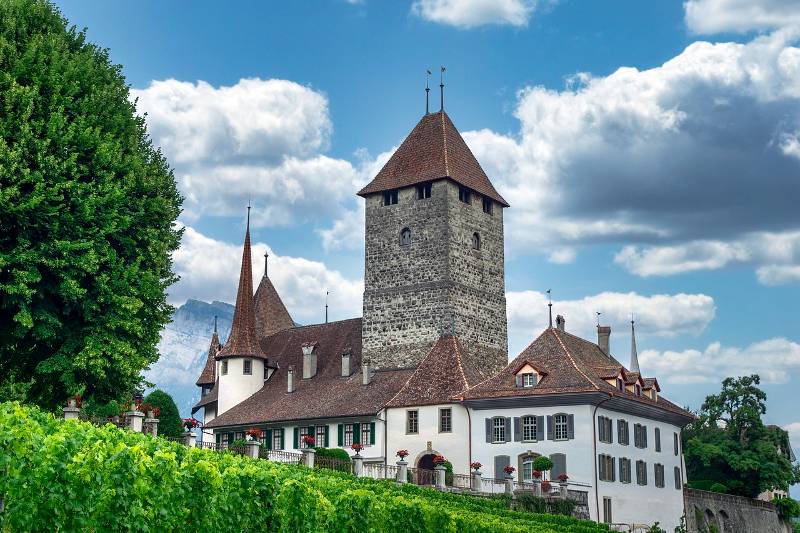
This one ranks second for a lakeside castle sitting almost directly in the water and a noticeably lower-key feel, a strong pick for anyone who wants Thun’s setting without quite as much going on.
INTERLAKEN REGION UNCOVERED: A FIRST-TIMER'S GUIDE (UPDATED FOR 2026)
Everything you need to know when planning a trip to the Interlaken, Grindelwald & Lauterbrunnen area.
AFFORDABLE AT ONLY 27.5 CHF

3. Iseltwald
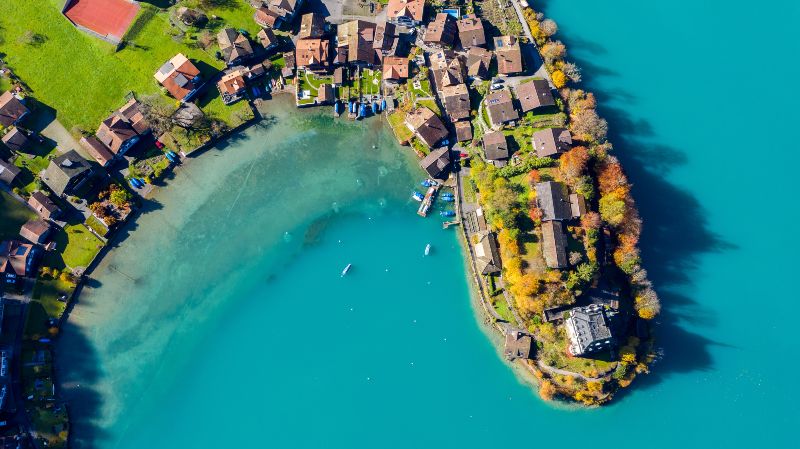
This cute Lake Brienz town takes third on the strength of a single, very specific draw, the small lakeside pier that became a pilgrimage spot after a Korean drama filmed there, genuinely worth the detour, but with less to do beyond that one spot and photo.
4. Brienz
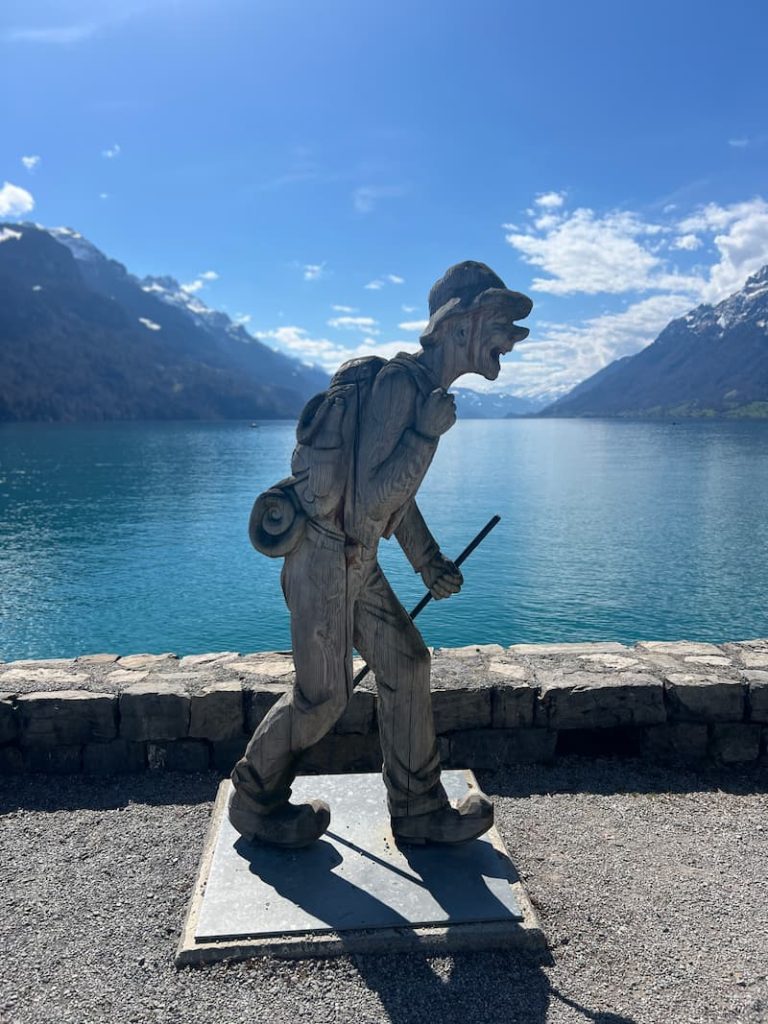
The town named after the lake ranks last not for lack of charm, but because it is better suited to a short stop than a multi-day base; its woodcarving heritage and small scale make it a worthwhile detour rather than a place to build a full itinerary around.
👉👉 SEE WHAT ELSE YOU CAN DO ON THESE LAKES
Lake Geneva (western Switzerland, French-speaking)
Lake Geneva’s shoreline has the mildest climate in Switzerland, mixing lakeside promenades with vineyard terraces climbing the hills behind them.
I recently visited here for two weeks while dog-sitting, and I got to explore almost all of them. It’s a stunning region that is under-appreciated, so if you get time – spend 3-4 days here and soak it all up…
1. Montreux
Want To Save This For Later?
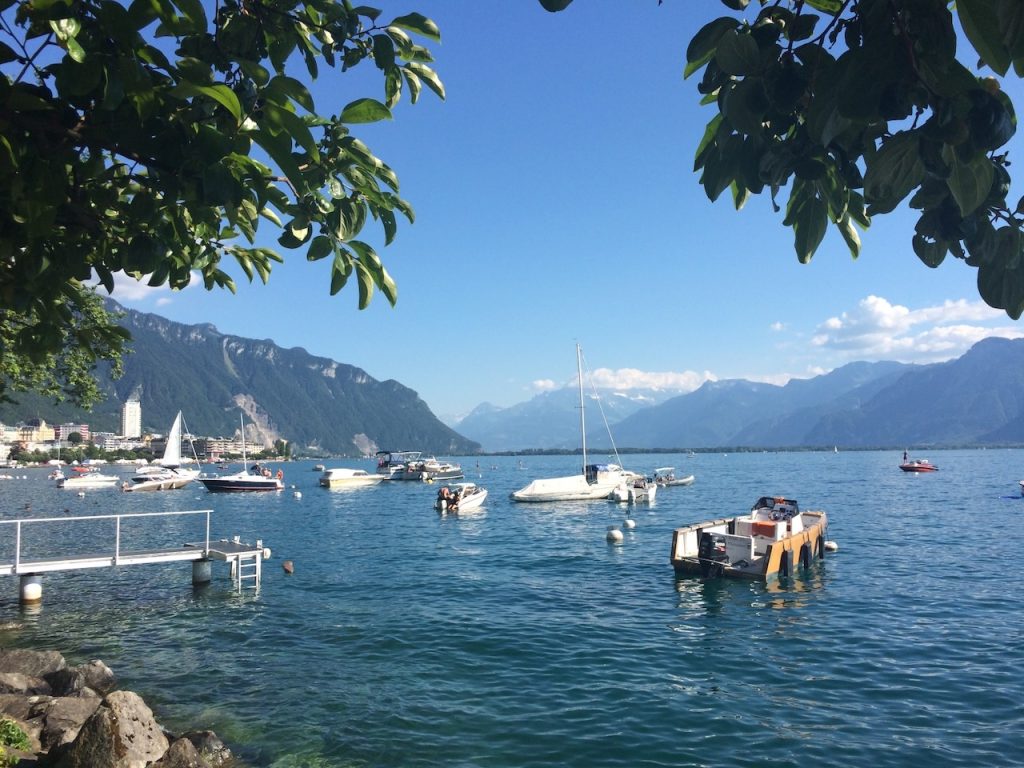
Montreux takes the top spot for having the strongest combination of things to actually do:
- Château de Chillon
- the Jazz Festival
- a genuinely walkable promenade, rather than scenery alone.
It’s the best-known name on the lake, and the palm-lined promenade reflects a climate mild enough to support them.
2. Vevey
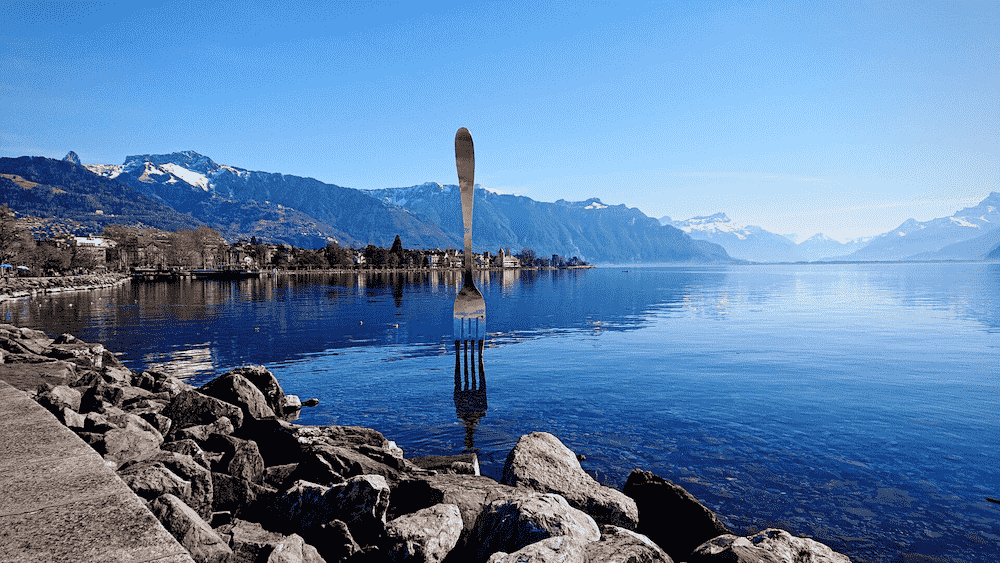
For me, Vevey ranks just behind Montreux because it trades a chunk of that name recognition and activity for a quieter pace
It’s a fair trade for anyone who wants the same lake without the crowds, but a step down if the goal is to have as many activities within walking distance.
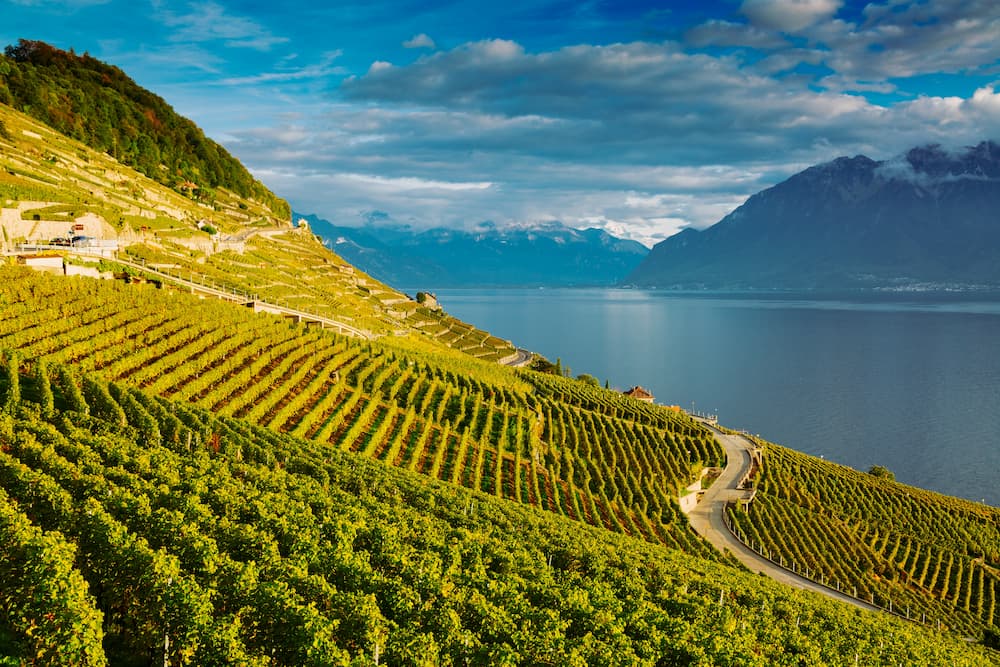
It’s close to the Lavaux vineyard terraces, a UNESCO World Heritage site of steep, lake-facing rows of vines.
3. Nyon

This stunning lakeside town sits third, not because it’s worse to look at, but because it has the least going on of the three beyond its old town and market, better suited to a quiet stopover than a multi-day base.
It does have a genuine Roman-era old town, a medieval castle, and ferries across to the French side, with Mont Blanc visible on a clear day.
Lake Zurich

Rapperswil, known locally as the “town of roses,” combines a lakeside castle with genuinely pretty old-town streets, and it’s an easy, scenic boat trip from Zurich itself, a good day trip rather than a full base for most visitors.
👉👉 SEE WHAT ELSE YOU CAN DO AROUND ZURICH
Lake Maggiore and Lake Lugano (Ticino, Italian-speaking)
Switzerland’s southern, Italian-speaking region has a noticeably different feel from the rest of the country: warmer, with a Mediterranean climate and architecture.

1. Morcote
Morcote ranks first for looking the part more than anywhere else on this list, with its stacked-stone houses climbing the hillside above the water, and is frequently named among the most picturesque villages in the country, though it has fewer restaurants and amenities than Ascona.
2. Ascona
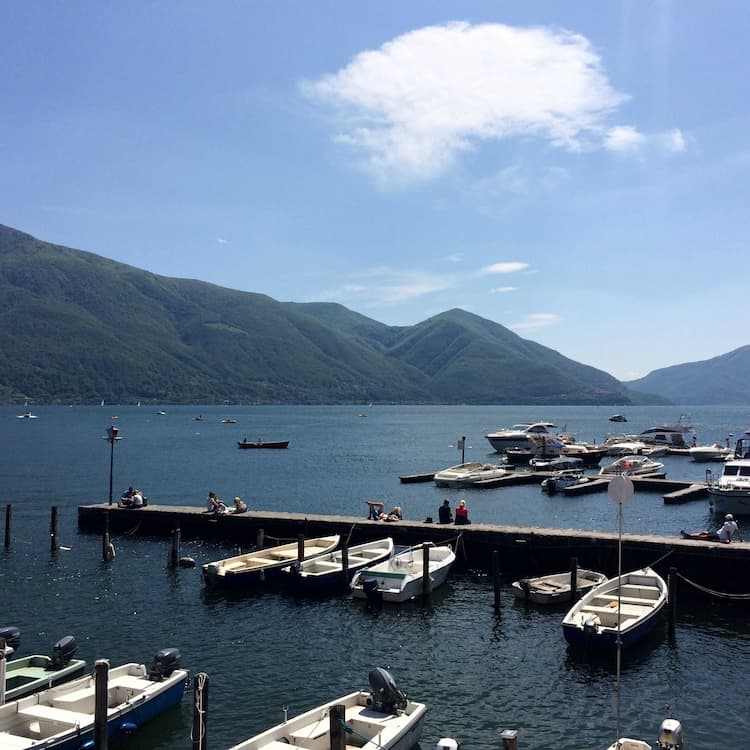
This town ranks second, not for being less attractive, but for leaning more into a resort-town feel with palm-lined promenades and more infrastructure for visitors, a fair trade if the goal is a comfortable stay rather than the most striking single view.
If you can only pick one
Across all five regions, Weggis and Thun are the two towns that come up again and again as the ones people wish they’d stayed longer in rather than just passed through, genuine alpine lake scenery paired with enough to actually do and eat, without either the crowds of Lucerne or the full-tourist-town feel of Interlaken next door.
If the trip only allows one lake region, either is a safe first choice.
BONUS TIPS
Best time: Late spring through early autumn for lake swimming and boat schedules running at full frequency; most towns’ boat services scale back significantly outside this window. (See more about seasons here)
Getting there: Lake boats connect most towns within each region directly, and Switzerland’s train network connects the regions to each other, so no car is strictly necessary even to cover several of these in one trip.
One planning tip: Trying to combine towns from more than two of these regions in a single short trip usually means more time in transit than at the lakes themselves. Picking one or two regions and going deeper tends to work better than skimming all five.
Which lake town is your favorite, or which one do you think we’re underrating? Tell us in the comments.



We stayed on outskirts of Spiez on our 1st trip 1983 & have loved it ever since. Several of our trips we have stayed in Spiez. Trip before last, we stayed above Spiez in Hondrich. We had views of the lake & of the farm next door. One day there was a precious child ~ age 3-4 brushing the calves. The only drawback to Hondrich was that during out time there, the last bus up from Spiez was 7pm. In addition to its castle & lake views, Spiez has superb train connections.
I enjoy reading all your articles. I do think you should have mentioned Lausanne on Lake Geneva, lac Léman…. It has a lot of history, Roman ruins, the Olympic museum and more…
sure but its not a town :> it’s a city. Plus I don’t like it. But that’s just me. Still a city.
So sorry…. Why don’t you like it?
I guess I like it because I grew up close byand went to university there and have great memories…
But I left a long time ago, and I understand things have changed a lot…. I’ll be there in October visiting family and I will make sure I go to Lausanne to see the changes…
I just find in comparison to the other places nearby it is not great – Vevey, Lutry, Morges, etc. But if you like the city vibe then I guess they are boring
Ashley, your articles are invaluable. Spent 2 weeks in Switzerland during May this year with a Swiss rail pass and it was magical. Have already booked a plane flight for next year for a 4 week stay. Hired an appartment for 4 nights on Brienz and fell in love with the place. Iseltwald and Thun we loved. Next year I shall try a different lake town, thanks for the advice.