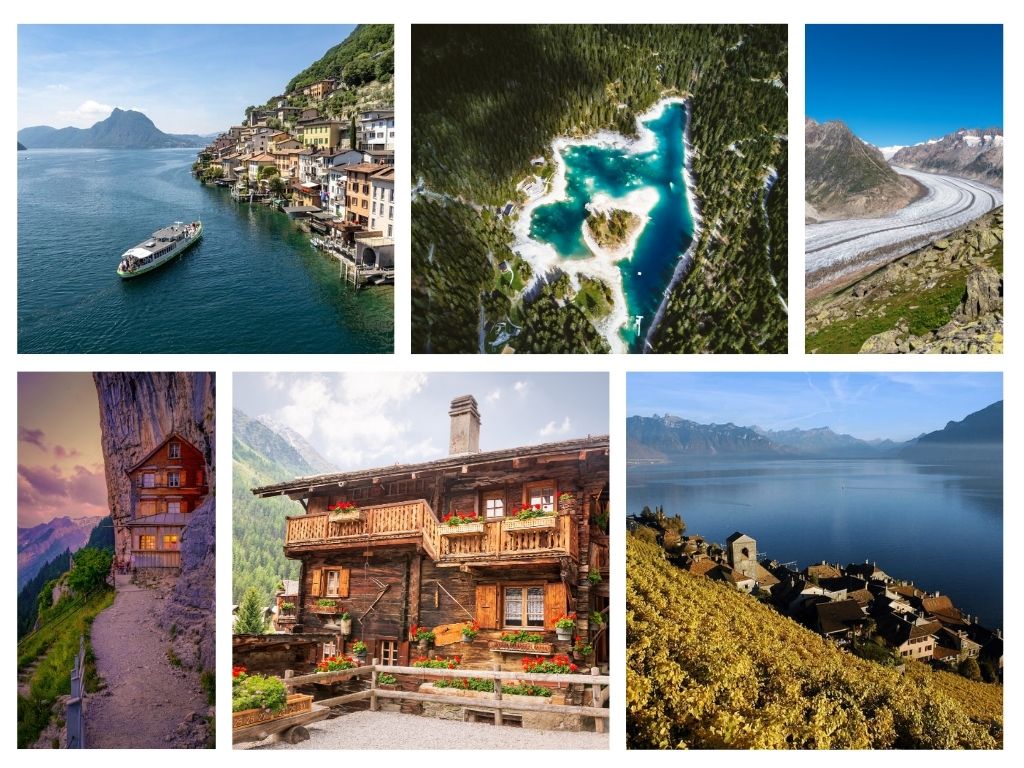
Switzerland is famous for the Matterhorn and Lucerne, but the real soul of the country lies in the valleys that tourists usually drive right past.
If you want to see Switzerland “unfiltered”—without the selfie sticks and the crowds, here are 20 places just for you.
1. Val Bavona (Ticino)
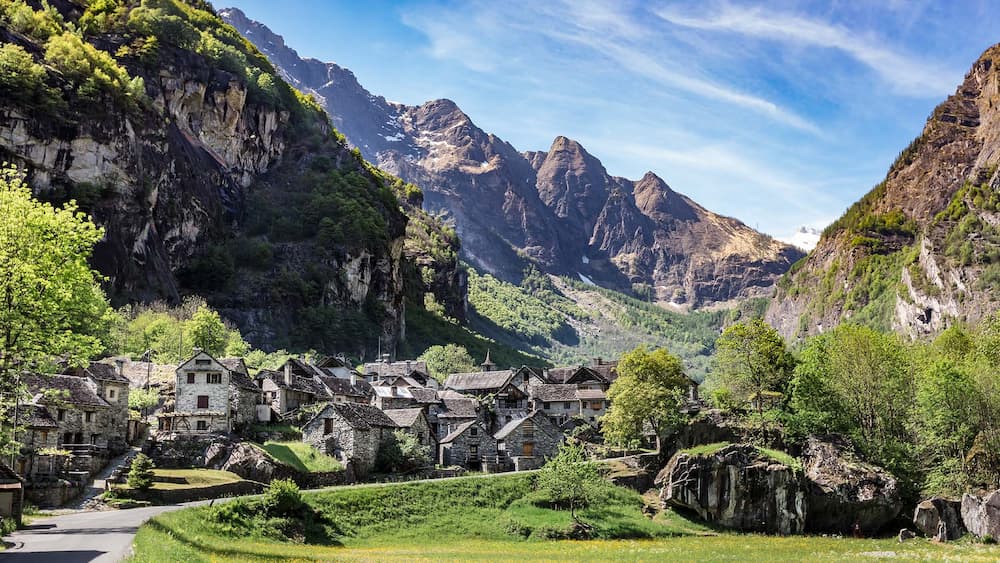
Known as the “Valley of Stone,” this is one of the steepest and wildest valleys in the Alps. Interestingly, most of the 12 hamlets here are not connected to the electrical grid, relying on solar power and gas to preserve their medieval charm.
2. Creux du Van (Neuchâtel)

Think of Creux du Van as the “Grand Canyon of Switzerland.” It’s a massive natural rock arena with 160-meter-high vertical cliffs. It’s a bit of a hike, but standing on the edge of this limestone horseshoe is a spiritual experience.
3. The Village of Gandria (Ticino)

Perched on the edge of Lake Lugano, this car-free village is a labyrinth of stairs and narrow alleys. It feels more like the Amalfi Coast than the Alps, complete with olive trees and lakeside grottos.
4. Lake Cauma (Flims)

The water here is a shade of turquoise so bright you’ll swear it’s been photoshopped. Because it’s fed by underground springs, the water is surprisingly warm for an alpine lake, making it the perfect hidden swimming hole.
5. Val Müstair (Graubünden)

Located in the far eastern corner of the country, this UNESCO-listed valley is where Romansh is still spoken. It feels like a time capsule of rural Swiss life, surrounded by the jagged peaks of the Swiss National Park.
6. The Aletsch Arena (Valais)

While people flock to see the Matterhorn, the Great Aletsch Glacier is the largest ice flow in the Alps. Visit the car-free villages of Bettmeralp or Riederalp for a front-row seat to this “river of ice.”
7. Saint-Ursanne (Jura)

Replacing the typical lakeside stops, this medieval town on the banks of the Doubs River is like stepping back into the 14th century. It’s famous for its three-arched stone bridge and its total lack of modern commercialism.
8. The Verzasca Valley (Ticino)

vValle Verzasca is famous for the “James Bond” bungee jump at the dam, but the real secret is the Ponte dei Salti—a double-arched stone bridge over emerald green waters that look like liquid jade.
9. Ebenalp and the Aescher Guesthouse (Appenzell)

You’ve likely seen the photo of a restaurant built into the side of a cliff. That’s Aescher. The hike through the Wildkirchli caves to get there is just as impressive as the view.
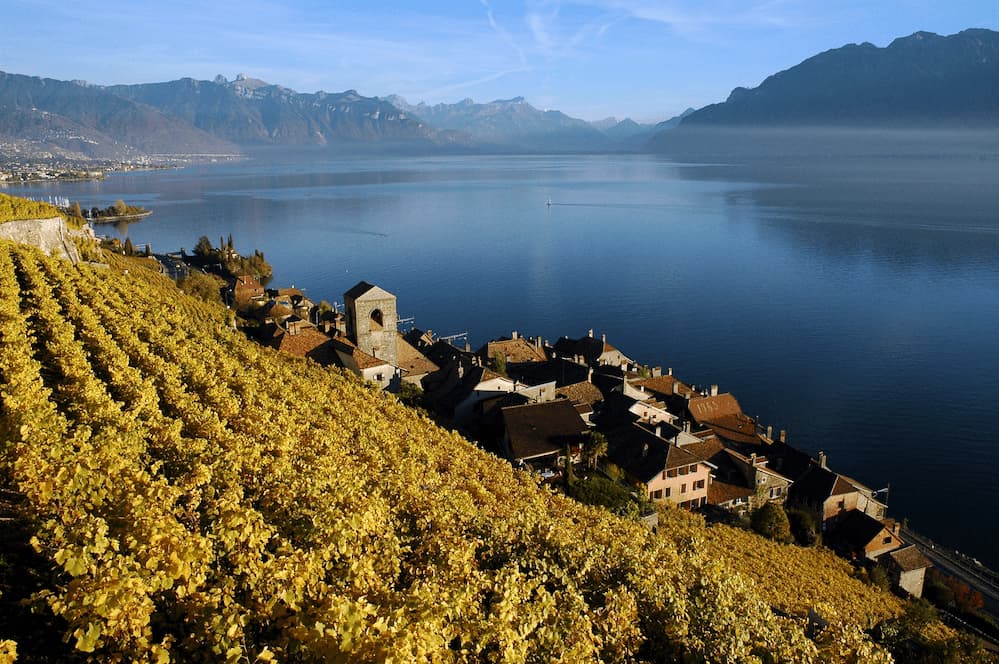
10. Saint-Saphorin (Vaud)
Want To Save This For Later?
Located in the heart of the Lavaux vineyard terraces, this medieval village is all about wine and cobblestones. It’s far less crowded than nearby Montreux but offers the same stunning Lake Geneva views.
11. Solothurn

Often called the most beautiful Baroque city in Switzerland. It has a strange obsession with the number 11—there are 11 churches, 11 fountains, and even a clock with only 11 hours.
12. Lake Seealpsee (Appenzell)

Hidden in the Alpstein mountains, this lake reflects the surrounding peaks like a perfect mirror. It’s a favorite for local hikers but rarely makes it onto international itineraries.
13. Soglio (Graubünden)
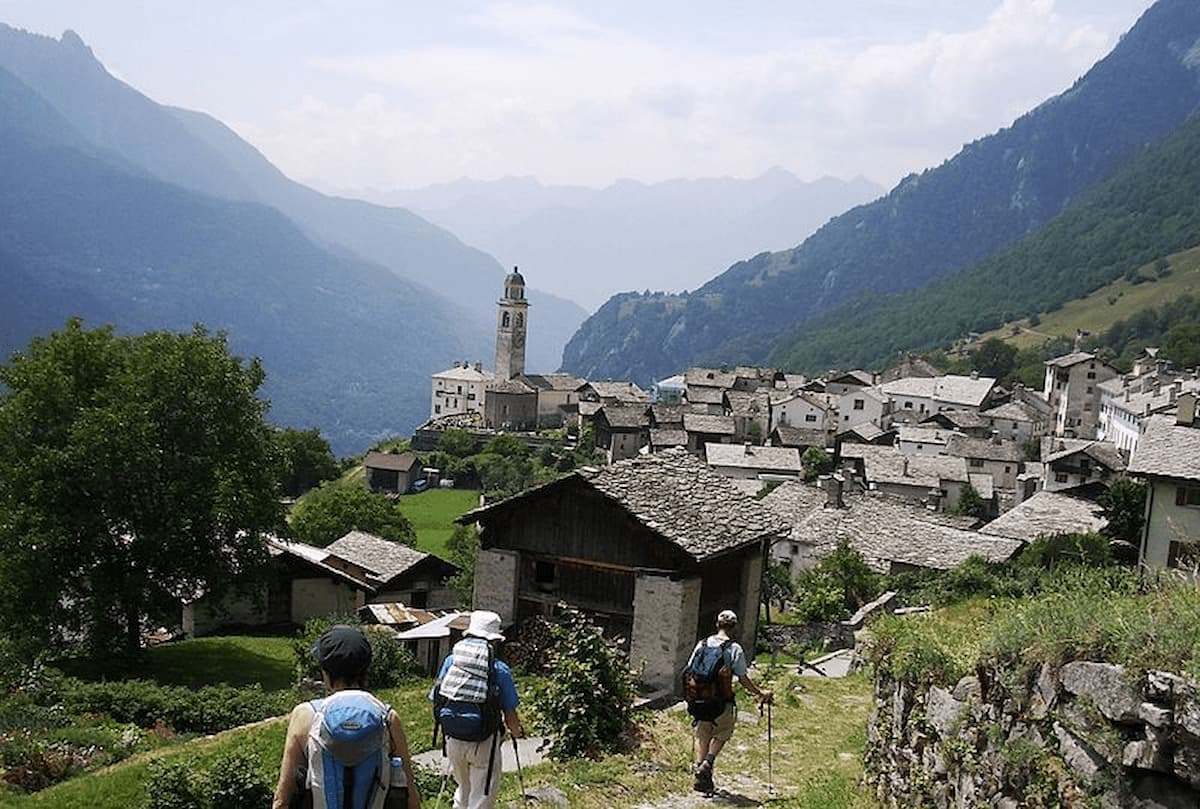
The painter Giovanni Segantini called it “the gateway to paradise.” Perched on a sunny terrace in the Bregaglia Valley, it’s famous for its chestnut forests and views of the granite “Bondasca” peaks.
14. Guarda (Graubünden)

Replacing the high-altitude Bernese spots, Guarda is a “Schellenursli” village in the Lower Engadine. The houses are decorated with intricate sgraffito (etched plaster), and it’s one of the best places to experience authentic Romansh culture.
15. Gruyères (Fribourg)
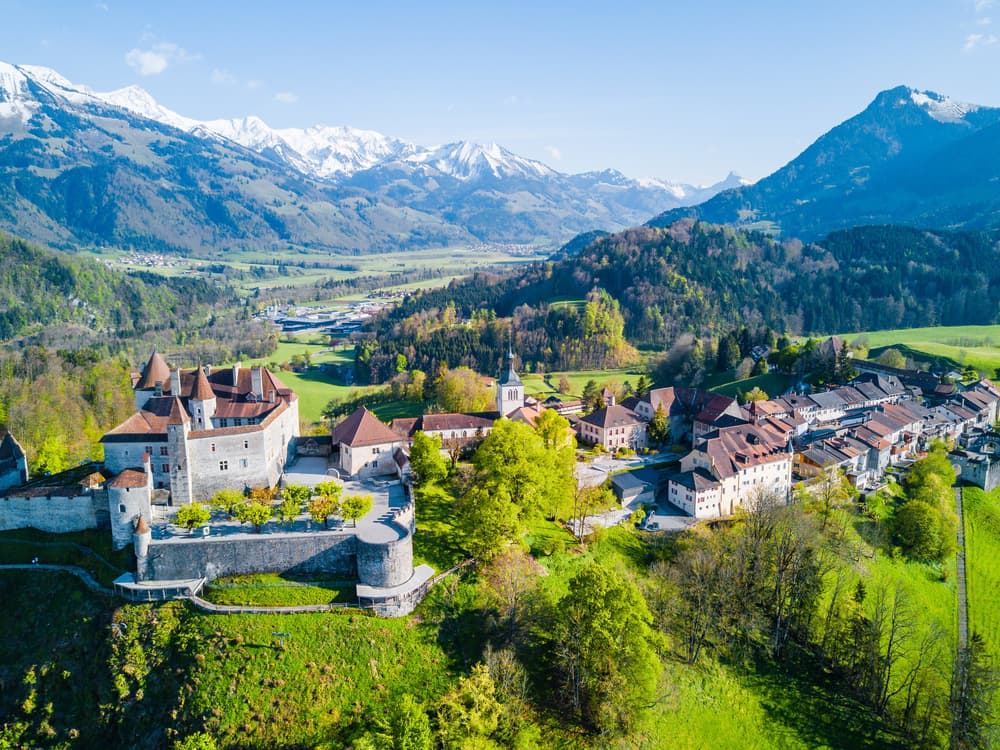
Yes, like the cheese. This hilltop medieval town is perfectly preserved. Don’t miss the HR Giger Museum (the creator of the “Alien” movies), which is housed in a castle here.
16. Grimentz (Valais)
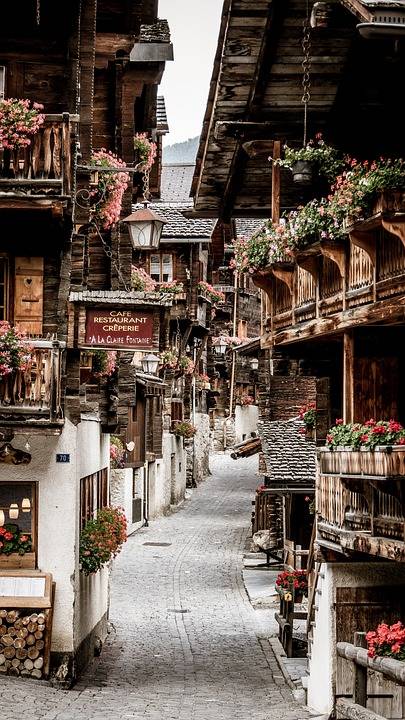
Known as one of the most beautiful villages in Europe, Grimentz is famous for its blackened timber burnt-wood chalets and the bright red geraniums that burst from every balcony. It smells like old pine and woodsmoke.
17. The Rhine Gorge (Ruinaulta)

Known as the “Swiss Grand Canyon,” this area features massive white rock walls and the winding Rhine river. It’s a paradise for rafters and hikers looking for dramatic geology.
18. Evolène (Valais)

A village where traditional Valaisian life is still very much alive. You can see people wearing traditional costumes, and the architecture features heavy stone-roofed houses that have stood for centuries.
19. Klöntalersee (Glarus)

While Oeschinensee gets all the fame, Klöntalersee is Switzerland’s hidden “fjord.” Tucked between the towering rock walls of the Glärnisch massif, its mirror-still water is perfect for wild swimming and barbecues on the shore without the tourist shuttle buses.
20. Foroglio (Ticino)

A village in the Val Bavona that is famous for a massive waterfall that drops right next to the stone houses. It looks like a film set from Lord of the Rings.



Wow Ashleey, finally you hit on some lesser known places in Switzerland. I was wondering if that would ever happen or if you keep on talking about the already overrun places like Interlaken, Zermatt , Lucerne etc. I am Swiss who has lived in 6 countries and yet I have been going back, visiting family, every year over the 47 years I have lived abroad. Now only my brother (who is also my best friend) is left. He worked for Swiss Tourism for 35 years and he shows me a new Swiss Gem every year. We also love going back to Solothurn where we grew up and where we both still have friends.
You give some good advice so keep it up promoting the lesser know places of this beautiful country.
Best regards from Sedona AZ,
Judith