
Switzerland is stunning — mountains, lakes, chocolate, cheese — the whole dream.
But behind the postcard-perfect scenery are a few surprises you’ll want to know before you land.
Here’s what nobody told you (but I will):
QUICK TIPS – SWITZERLAND DOs and DON’Ts
| What to Do (The “Do’s”) | What to Avoid (The “Don’ts”) |
| 💦 Do bring a reusable water bottle. Fill it up for free at any of the thousands of alpine public fountains. | Don’t buy bottled water. It is incredibly expensive and completely unnecessary given the tap quality. |
| 📱 Do check the SBB App passenger load. Look for the little “human icons” to see how crowded a train will be. | Don’t plan a shopping day on Sunday. Cities are completely shut down, and you will find yourself staring at closed doors. |
| 🗣️ Don’t try to make forced small talk. The Swiss are polite but private; they respect their personal space. | Do buy groceries for Sunday on Saturday. Or, head to a major train station/airport shop if you get stuck. |
| 💰 Do carry a few CHF 1 and 2 coins. You will absolutely need them for public restrooms at train stations. | Don’t expect restaurant tap water to be free. If you order Leitungswasser, restaurants often charge a service fee. |
| 🥾 Do check hiking trail sign colors. Stick to solid yellow if you aren’t wearing proper, ankle-supporting hiking boots. | Don’t underestimate the mountain sun. Even on cloudy or cold days, the alpine altitude will burn you fast. |
| 🤫 Do respect the 10:00 PM quiet hours. Keep your voice down on public transport and inside your accommodations. | Don’t try to make forced small talk. The Swiss are polite but private; respect their personal space. |
| ⚡ Do bring a specific Swiss Adapter (Type J). Standard thick, grounded European plugs will not fit the recessed outlets. | Do buy groceries for Sunday on Saturday. Or, head to a major train station/airport shop if you get stuck. |
Switzerland Is Crazy Expensive

Be ready. A basic lunch can run you CHF 25.
A full meal out can cost 100 CHF for one person – starter, main, dessert, plus drinks.
A coffee? CHF 5.
It’s not budget-traveler-friendly unless you plan carefully. Cook when you can, take advantage of grocery store meals (hello, Coop + Migros), and look into city passes and transport discounts.
👉👉 Check out these Budget Tips
Public Transport Is a Masterpiece — But Not Cheap

Trains and buses are clean, punctual, and scenic. They are the simplest and most relaxing way to get around, especially since cars are not welcome in many places, and parking is very limited.
But tickets add up quickly, so often a train pass is the best way to go.
Pro Tip: If you’re traveling around, grab a Swiss Travel Pass or Half Fare Card — they’ll save you a ton.
Cheese and Chocolate Are a Way of Life

Fondue, raclette, Toblerone, Lindt — it’s not a stereotype, it’s a national obsession.
If you’re lactose-intolerant, bring your enzymes. Otherwise, prepare for tastebud heaven.
You can just grab chocolate in the supermarket, or head to one of the many specialty shops in each city or town (more links on that below). There are also some great factories like Lindt outside Zurich, or Cailler, a short trip from Geneva.
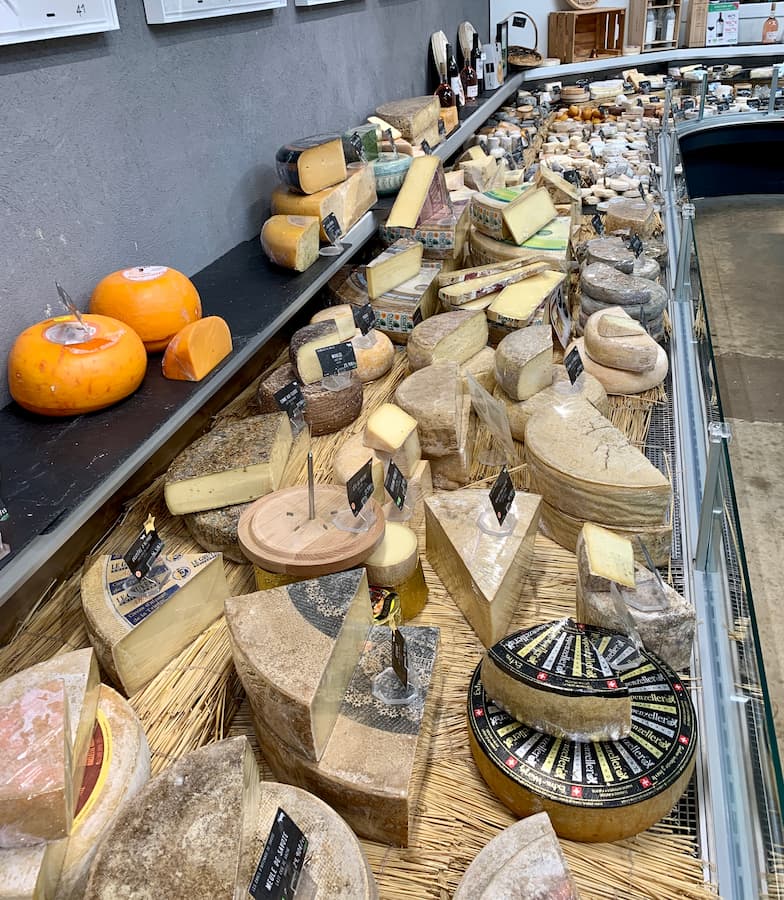
And as for cheese, you can also go nuts in the supermarket, or head to one of the various cheese makers for a tour.
👉👉 Chocolate Shops in Zurich, Lucerne, Geneva
Sundays Are Basically a National Nap

Almost everything is closed on Sundays — shops, supermarkets, and even some restaurants.
Plan ahead, or get used to wandering empty streets, wondering where everyone went.
This is also true of public holidays, but don’t think the mountains are closed – they want your money and are open almost all year around, except when they do maintenance in the shoulder seasons (grab you mountain closures list here)
Major train stations (like Zürich HB’s ShopVille or RailCity locations) and airports are exempt from Sunday closing laws. Their grocery stores (Migros/Coop), pharmacies, and shops are open 365 days a year.
👉👉 Find out what is open on Sunday
Peak Season Can Be VERY Busy

Most of you want to come in the peak of summer (or winter for skiing) but don’t realise how busy it is. How expensive it gets. And how difficult it can be to find accommodation.
Of course, it could be that you don’t have a choice. But if you can avoid July and Christmas, you will be far better off.
👉👉 Learn all about the Best Seasons to Visit
It’s Like Four Countries in One

Switzerland has four national languages — German, French, Italian, and Romansh — and each region feels completely different.
German is spoken in most of the country, from Zurich to Zermatt.
But head to the very west and you will get French, all the way down to Geneva and the French border.
In the South and the center, you have a small Italian part that gives it a Mediterranean feel!
And in the South-east, there is Graubunden and the Engadine Valley, where the lovely Romansh is spoken.
But don’t stress, English is spoken almost everywhere.
You Often Have to Pay to Use Public Toilets

I tell my consultation clients this all the time.
Public restrooms can cost CHF 1–2. Not all places are free, especially in train stations. So make sure you have a little change with you at all times.
Some accept cards, some don’t. Use restrooms at restaurants or stores to avoid charges.
And if you are running for a train, then remember there are toilets on them as well.
👉👉 Need to go to the bathroom? Where to find toilets in Switzerland
👉👉 Learn all about tipping in Switzerland
The Weather Is a Rollercoaster — Even in Summer

You can start your day sunbathing and end it in a snowstorm if you’re in the Alps.
Always carry layers and a waterproof jacket.
Trust me on this. It’s just not Cancun. Even if you only saw sun in the pictures on Instagram.
👉👉 Pro Tips: This post helps with picking the perfect jacket, here is another packing list to help.
The Tap Water Is Some of the Best in the World

Seriously — don’t waste your money on bottled water.
In many places, Swiss tap water is crisp, clean, and straight from the Alps.
You’ll even find public fountains everywhere (especially in cities like Zurich, Bern, and Lucerne) where you can refill your bottle.
Want To Save This For Later?
If there’s no sign to the contrary, it’s drinkable.
👉👉 Learn more about drinking water in Switzerland
The Swiss Take Quiet Seriously
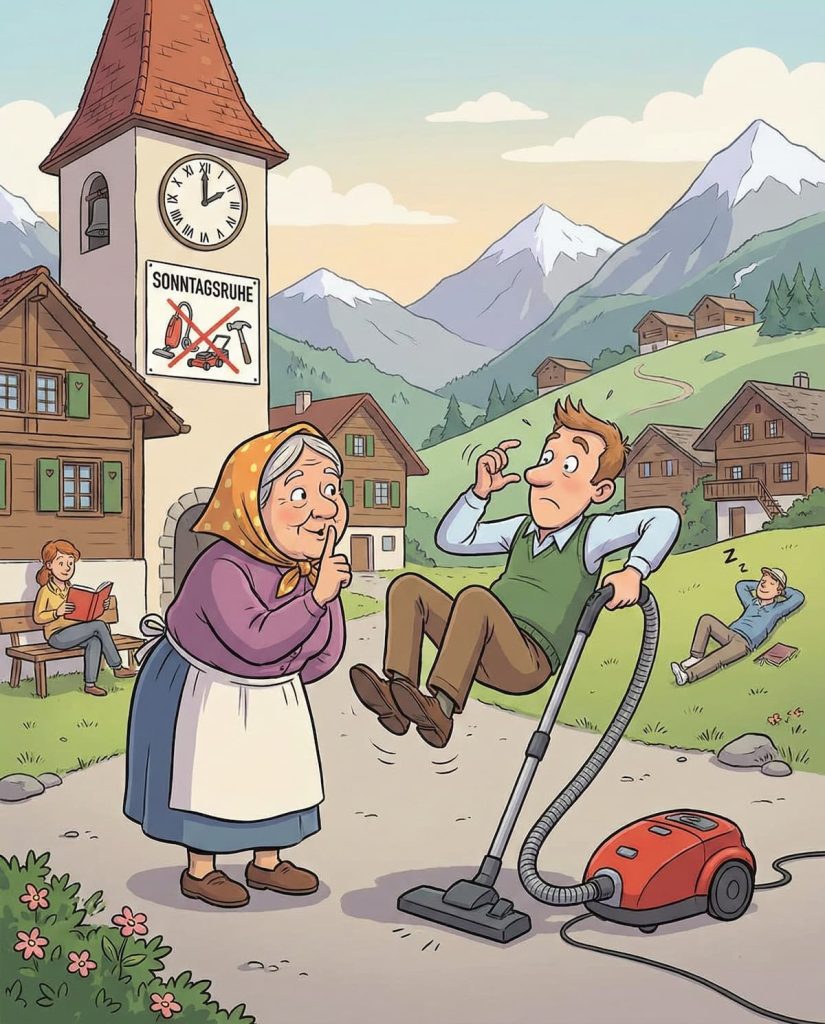
No loud talking on public transport. No vacuuming or lawn mowing on Sundays.
No wild house parties past 10 PM.
Respect the peace or face the disapproving looks of doom. Or, even a call to the police, seriously!
Punctuality Is Practically a Moral Value

Being late is rude. Five minutes early is ideal.
Whether you’re catching a train, meeting someone, or going on a tour — be on time. Always.
If you make a restaurant booking, which I recommend in peak season, you must turn up on time; if you are 30 minutes late, your table may not be there.
If you are not coming at all, just call to let them know, it’s a loss of money for the business!
The Sun Can Be Brutal in the Mountains

Even when it’s cold or cloudy, the sun at altitude is intense.
Pack and wear sunscreen — especially if you’re skiing, hiking, or just vibing by a lake.
Sunburn here sneaks up on you fast.
👉👉 Here is my packing list to help.
Small Talk Isn’t Really a Thing
The Swiss are polite but reserved. Don’t expect strangers to strike up a conversation.
It’s not unfriendly — it’s just culturally different. Respect the personal space.
Hiking Trails Are Everywhere — and Gloriously Marked

Switzerland is a hiker’s dream.
Trails are marked by yellow signs and you’ll find everything from chill lake strolls to alpine adventures.

How Swiss trail signs work:
- Solid Yellow: Easy walking paths (sneakers are fine).
- White-Red-White: Mountain trails (proper hiking boots with ankle support required).
- White-Blue-White: Alpine routes (expert only, often requires ropes/crampons).
Also, keep in mind that most routes (not all) are often not marked as a “named trail,” but instead the signs point to destinations. Often with hiking times.
Bonus: cable cars make high-altitude hikes super accessible and take you to some stunning hikes like
- Mannlichen Panorama Trail
- Bachalpsee hike above Grindelwald First
- Oeschinensee Lake
👉👉See other hikes around Lauterbrunnen, Grindelwald, Interlaken
Swiss Wine Exists — and It’s Really Good

They just don’t export much, so you’ll rarely see it outside the country.
When you’re there, try local wines (especially from the Valais or Vaud regions).
You’ll be pleasantly surprised.
Cleanliness Is a National Sport

Littering? Huge no. Recycling? Mandatory.
Even your Airbnb might have a 3-bin system. Respect the rules—they help keep the country as stunning as it looks.
So, if you are out and about, try to throw your trash in the bin, and if you can, in the bin designated for PET bottles, paper, and cans.
Other Things You Should Know
The Swiss Power Plug Trap

Many tourists assume Switzerland uses standard European plugs. The three-prong grounded European plugs (Type E/F) do not fit into the unique, recessed hexagonal Swiss sockets (Type J). They will need a specific Swiss adapter.
👉👉 Learn more about Swiss adapters and plugs
Can I Use Euros?

Tourists who cross the border from the EU always wonder about this.
While major train stations, hotels, and tourist shops may accept Euros, the exchange rate given is usually extremely poor, and change will always be returned in Swiss Francs (CHF).
Advise them to stick to credit cards or local cash.
👉👉 Learn more about how to save on cash and credit card fees
Restaurant Tap Water Isn’t Free

While tap water from public fountains is pristine and free, ordering a glass of tap water (Leitungswasser) at a restaurant often isn’t.
Restaurants frequently charge a “service fee” (sometimes up to CHF 4–5), which shocks visitors.
It’s better than ordering a bottle of water, which is often more expensive, but if you just want beer or wine, then skip the water altogether!
Farm “Honesty Boxes” (Hofläden)
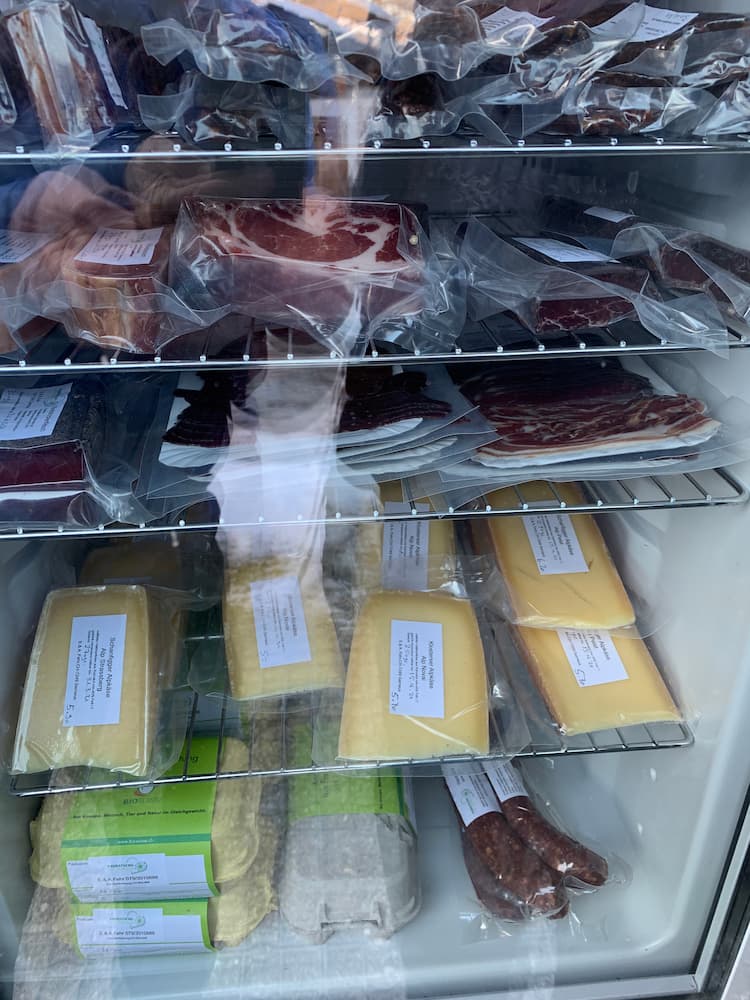
While hiking, you will often find unstaffed farm fridges selling fresh cheese, dried meats, and milk.
These operate entirely on trust. However, they require exact cash or TWINT (a Swiss payment app that international tourists usually cannot download). So have at least 6-7 Francs in coins for a block of cheese or a salami!
Emergency Air Rescue Costs (REGA)

If someone gets hurt hiking and needs a helicopter, it can cost thousands.
Never underestimate the importance of travel insurance that covers mountain rescue, or becoming a REGA patron before you leave (it only costs 30 CHF).
Plan Your Trip to Switzerland
 Accommodation: I always book my hotels via Booking.com. They have some of the best rates, longterm deals, easy cancellation and more
  Transport: Train travel is one of the best ways to explore Switzerland. Buying a Swiss Travel Pass is a great way to save money on travel and museums.
  Car Rental: Having a car gives you flexibility on your travels. I use RentalCars.com and Discover Cars to get the best deals on car rentals in Switzerland.
  Luggage Storage: Find out where you can store your store your luggage while you are visiting various places in Switzerland.
  Trips & Tours:Viator and Get Your Guide are the best places to find local tours and trips for your adventures in Switzerland.
  Packing: Here are my recommendations for what to pack for a trip to Switzerland. As someone who has lived half their life in Switzerland, I have a good idea of what you need to bring!


My husband and I are planning on going to Switzerland the first part of June next year(2026). We are 80 years old, so any tips will help. We’re going to stay in Lauderbrunnen.
You can search on the top of the website, there are lots of posts on the whole of Switzerland or my guides in the top menu might also help
Take a Jungfrau rail pass. There are passes of 3,4,5,6,7 days and you can travel to many many places .
I recommend Togo to Wengen, Kleine Scheidegg, Grindelwald, First, Schynige Platte, Interlaken and the lakes near Interlaken and ofcourse above Lauterbrunnen the beautiful village Murren, , and the trip to Piz Gloria on theSchilthorn.
All these places you vacant visit with the Jungfrau pass.
Kind regards from a Dutch lady that has visited Grindelwald for 40 years! Regards from Amsterdam.
P.s. I am of your age . If you can, walk around Kleine Scheidegg the easy rather flat walkingroutes with the Eiger, Monch and Jungfrau in front of your eyes.