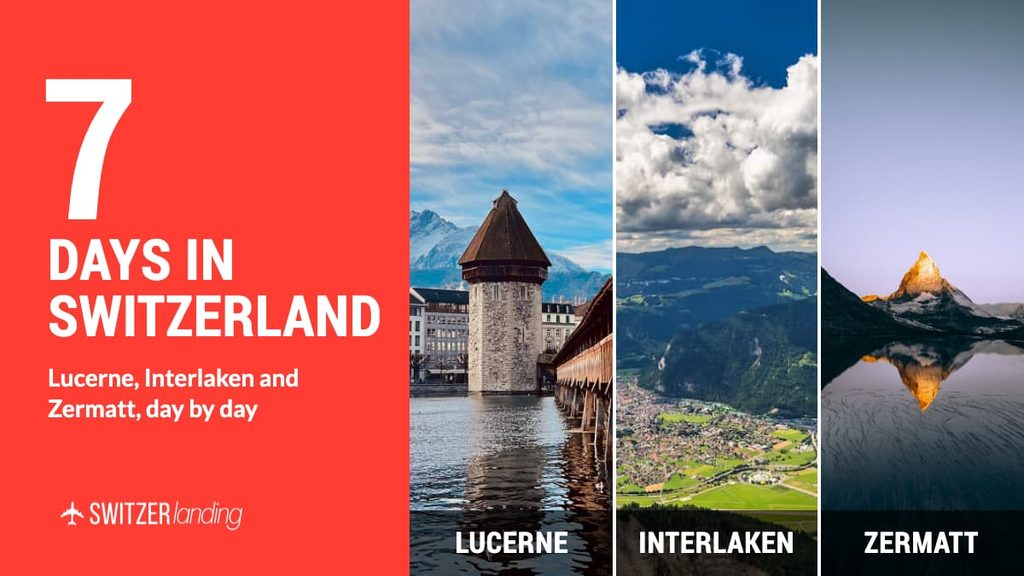
This is the route I give most first-time visitors who have one week and want the big mountain scenery without rushing around the whole country. Two nights in Lucerne, three in the Interlaken region, one in Zermatt, and a train out on day 7.
Every leg is a train, the days are not packed to the minute, and there are clear places to add time or cut it. If you want the longer version that starts in Zurich, I have that too in my 7 day itinerary for Switzerland.
👇👇👇 SEE THE ROUTE ANIMATED BELOW 👇👇👇
The route at a glance
| Day | Where | Main plan |
|---|---|---|
| 1 | Lucerne | Arrive, old town, lake |
| 2 | Lucerne | Pilatus, then Lion Monument, Glacier Garden, Musegg Wall |
| 3 | Interlaken region | Scenic train, settle in, short boat ride on Lake Brienz |
| 4 | Interlaken region | Jungfraujoch (or Männlichen on a budget or bad weather day) |
| 5 | Interlaken region | Lauterbrunnen Valley, Schilthorn, Mürren |
| 6 | Zermatt | Train, village, Matterhorn at sunset |
| 7 | Zermatt, then onward | Early Gornergrat and Riffelsee, train to Zurich, Geneva or Milan |
Seven days here means six nights, with day 7 as your travel day. If you can add a night, I tell you exactly where to put it further down.
Before you go: passes and weather
Check the weather a couple of days ahead and be ready to swap days 4 and 5. Mountain views are the whole point of this trip, and a clear forecast on Jungfraujoch is worth more than sticking to the order I wrote.
🚂 Deciding between a Swiss Travel Pass and point-to-point tickets? Read which train pass should I buy first. For a week like this, see how much a week in Switzerland really costs.
Day 1: Arrive in Lucerne

Lucerne is a gentle first stop. It is compact; it sits on a lake, and you can walk everywhere.
Drop your bags at the hotel and head for the old town. Cross the Chapel Bridge, wander the lanes behind it, and walk the lakefront as the light drops. That is plenty for a first day, especially if you have just come off a flight.
If you want a ready-made route, my one day in Lucerne guide covers it, and 10 things most tourists miss in Lucerne is good for a second look at the old town.
1-3 DAYS IN LUCERNE: A FIRST-TIMER'S GUIDE FOR 2026
Everything you need to know when planning a trip to the Lucerne Area.
AFFORDABLE AT ONLY 23 CHF
🛏️ Where to stay in Lucerne
- Hotels near the train station: easiest for arrival day and the train to Interlaken on day 3
- Best hotels in the old town: the Chapel Bridge and lanes right outside your door
- More affordable places to stay in Lucerne
- Lakeside hotels
- 5 star options
Day 2: Pilatus, then the rest of Lucerne

Go to Pilatus in the morning while the air is clear. In summer, the classic way is the Golden Round Trip: boat across the lake to Alpnachstad, the world’s steepest cogwheel railway up, then the cable car back down. My full guide to it is here, and Mount Pilatus has the details about the mountain.
⚠️ Check the season
The boats only run in the warmer months. Outside that season, you take the train to Alpnachstad until the cogwheel closes in late October. After rhat, you can only go up on the gondola from Kriens.
👉👉 Not keen on Pilatus? Stanserhorn is a good alternative with a very different feel.
Back in town, use the afternoon for the three sights people often skip because they are away from the bridge:
- The Lion Monument, carved into a rock face
- The Glacier Garden, a small, odd and enjoyable place
- The Musegg Wall, where you can climb the towers for a view over the rooftops
Day 3: Lucerne to Interlaken

This is the day the trip changes from city to mountains. The Lucerne to Interlaken Express takes about 1 hour 50 minutes and is one of the country’s best train rides. Sit by the lake when you can (Right Hand Side)
👉👉 How to book the Luzern Interlaken Express, including when a reservation is worth it.
Choose your base
You have 3 nights in the region, so pick the base that suits you:
Interlaken
Easiest for trains, boats, and restaurants, and usually the best value. Choose a side with Interlaken Ost vs West, then see hotels near the train station.
Wengen
Car-free, quiet, and a short hop to Jungfraujoch. See why stay in Wengen and the best hotels in Wengen.
Grindelwald
Lively, with big views of the Eiger. See the best hotels with views in Grindelwald.
🛏️ More help choosing where to stay
- Where to stay in the Interlaken region: the full breakdown
- 13 cheaper places to stay around Interlaken
- Hotels still available around Interlaken if you are going in summer and have not booked
- Interlaken hotels with air conditioning for hot weather
Afternoon: a short boat ride
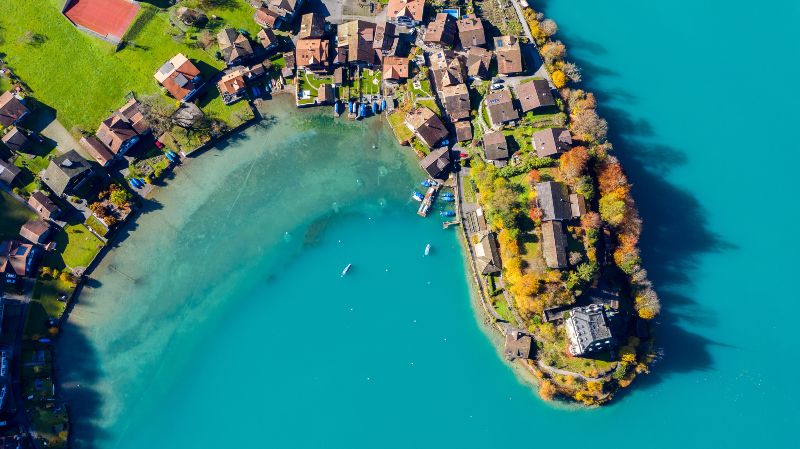
Once you have checked in, take the train from Interlaken Ost to Brienz and come back by boat. Train first, then boat, so you get the fast leg out and the slow, pretty one back.
Brienz is a small wood carving town with the lake right at its feet, and the boat back takes you past waterfalls and steep green shores. Check the boat timetable before you set off.
More on the lakes here: Lake Brienz and Lake Thun and Lake Brienz cruises.
Day 4: Jungfraujoch

This is the big one. Jungfraujoch is the high station at about 3,450 meters, with the Ice Palace, the Sphinx viewing platform, and glacier views. Start early, because it takes most of the day and the weather can turn by afternoon.
Plan B: Männlichen
If you want to skip the cost of Jungfraujoch, ride the gondola up to Männlichen and walk the easy panorama path to Kleine Scheidegg. You still get Eiger, Mönch and Jungfrau in front of you for a fraction of the price.
If you want to do Jungfraujoch, but save some money, this post shows you how to visit the Jungfraujoch without breaking the bank.
Day 5: Lauterbrunnen Valley, Schilthorn and Mürren

Lauterbrunnen is the valley with more than 70 waterfalls dropping off the cliffs, and it leads straight into a great day on the Schilthorn side.
A good order for the day:
- Take the train to Lauterbrunnen and explore the valley floor first, including Staubbach Falls.
- Continue to Stechelberg and take the cable car up through Gimmelwald and Mürren to the Schilthorn.
- Come down to Mürren for lunch and a walk. The walk from Mürren to Gimmelwald is one of my favourites in the region.
- Head back down to the valley in the late afternoon.
More to read:
- 7 reasons the Schilthorn is a must-see
- Wengen or Mürren
- Lauterbrunnen views
- What a day in Lauterbrunnen costs.
➕ Got more time in the Interlaken region?
If you can add a night or two here, it pays off best.
- A full lake day. Do Lake Brienz properly with Giessbach and Iseltwald, or head to Lake Thun. Train out, boat back, as on day 3.
- Schynige Platte or Grindelwald First. See Schynige Platte and better than Grindelwald First.
- A slow walking day. Start with 11 easy hikes in Interlaken.
- A buffer for bad weather. The most useful reason of all. See Interlaken in the rain for what to do when the clouds sit low.
[]jungfrau-guide]
Day 6: Interlaken to Zermatt

Leave after breakfast. The train to Zermatt takes about 2.5 to 3 hours with a change or two, through the Lötschberg tunnel and up the Mattertal valley. Zermatt is car-free (yes there are cars, but they are small and electric, just no normal cars are allowed), so you arrive at the station and walk or take an electric taxi to your hotel.
Drop your bags, then spend the afternoon in the village. Walk up to a viewpoint and watch the Matterhorn change colour as the sun goes down. Good places to see it are in best views in Zermatt and epic Matterhorn views.
Zermatt has some surprises too, so 10 things nobody tells you about Zermatt is worth a read before you arrive.
🛏️ Where to stay in Zermatt
- Zermatt hotels with Matterhorn views
- With only one night, pick a hotel close to the Gornergrat station so day 7 starts easily
- Worried about the cost? Read is Zermatt expensive
Day 7: Gornergrat, then onward

Your priority in Zermatt is Gornergrat, and it is worth getting up early for it. The cogwheel train climbs to over 3,000 metres with the Matterhorn in view nearly the whole way. Get off at Rotenboden for the walk down to Riffelsee, where on a calm morning the Matterhorn reflects in the water. If you are lucky you may meet the Valais Blacknose sheep along the way.
My guide to riding the Gornergrat Bahn covers tickets and timing.
Return to Zermatt around midday, collect your bags, and take the train out. Zermatt to Zurich is roughly 3.5 hours, and Geneva and Milan are similar. Leave a comfortable gap before any flight, and check the Geneva and Milan connections the day before.
⏱️ Short on time? Shorten or skip Zermatt
You have choices if the week feels too packed.
- Shorten it. Treat day 6 as a half day in the village and do only Gornergrat on day 7. This is already the plan above, so you can’t trim anything further without dropping Zermatt.
- Cut Zermatt completely. Spend an extra night in the Interlaken region, then take the train to Zurich or Geneva on day 7. You lose the Matterhorn but gain a more relaxed week.
- Cut a Lucerne night. If you only have 6 days, do Lucerne in one night with Pilatus early the next morning, and keep the rest.
➕ Got more time in Zermatt?
One night is tight, and a second night changes the whole feel of the stop.
- A slower Gornergrat day with the Riffelsee walk and time for lunch up top
- The Gorner Gorge and a walk around the village at your own pace
- Matterhorn Glacier Paradise, the highest cable car station in Europe, if the weather is clear
- The Five Lakes walk from Blauherd, one of the best easy walks in the area
👉👉 See how long to spend in Zermatt and things to do in Zermatt.
FAQ
Is 7 days enough for Lucerne, Interlaken and Zermatt?
Yes for the highlights. It is a full week, but it works because each move is a single train ride.
Where do I fly into?
Zurich is the easiest, and it connects well to Lucerne by train. Geneva is possible if you want to do the trip in reverse.
Can I do this in winter or out of season?
Some of it. Pilatus boats, certain lifts and walking routes change with the season, so check which mountain excursions are open for your dates.
Do I need a Swiss Travel Pass?
It depends on how many mountain trips you take. Run the numbers with the pass guide. or take my pass quiz
Final thoughts
If you only change one thing on this plan, make it the weather swap on days 4 and 5. Everything else holds together well, and the extra nights have a clear home if you can add them.
Tell me in the comments when you are traveling and what matters most, and I will point you to the right version.
NEED MY HELP WITH PLANNING?
I offer a number of services that may help you with your planning.
I do 1-1 video consults. These kinds of consults are useful for people who want to DIY their trip or at least prepare the itinerary for a travel agent to book the accommodation etc. It’s also a great way to use my knowledge once you have a rough idea of what you want to see and where you want to go. I can then help fill in the gaps, explain how long you need in each area, where to go, what to do, how to get there etc.
You can see my offers here https://switzerlanding.com/custom-travel-itinerary-planning/
Or if you want I can refer you to my partners who are travel agents to make you an offer on a full package (accomm, train etc). If that is of interest, they ask you to fill out this form https://switzerlanding.com/custom-travel-planning/
If neither of those suits you, you can take a look at my guides https://switzerlanding.com/guides/
which provide an insane amount of information in pdf form including complete itineraries.